

You’ll find Fender guitars across multiple price points, starting at $600 for Standard Series models up to $3,300+ for Custom Shop pieces. The Player Series offers quality value around $800, while Mexican-made Venterra Series guitars hit the $1,100 mark. American-made models command $2,000+, with vintage specimens from the ’50s and ’60s exceeding $10,000. Your choice depends on manufacturing location, components, and market timing – factors that can greatly impact your investment.
Key Takeaways
- Standard Series Fender guitars start under $600, offering an entry point for beginner and intermediate players.
- Player Series guitars cost around $800, delivering quality components and reliable performance for advancing musicians.
- Made-in-Mexico Venterra Series guitars are priced at $1,100, providing vintage-inspired tones and features.
- Artist Signature Models range from $2,500 to $2,600, featuring unique specifications and premium craftsmanship.
- Vintage Fender guitars from the 1950s and 1960s can command prices over $10,000 for collectors and enthusiasts.
Understanding Fender’s Guitar Series and Price Points
Fender’s guitar lineup spans five distinct series, each targeting specific price segments and player needs.
You’ll find the Player Series offering excellent value at around $800, while the Mexican-made Venterra Series delivers vintage character at $1,100. Acoustic guitars are often preferred for their simplicity, making them a good choice for beginners.
The American Series represents Fender’s premium craftsmanship, commanding higher prices for superior quality. Additionally, the string gauge measurement plays a crucial role in determining the best fit for your playing style.
For serious guitarists seeking unique features, Artist Models run between $2,500-$2,600, incorporating signature elements from famous musicians. The Standard Series serves as your gateway to Fender quality at entry-level prices. Each Fender series delivers specific guitar features that align with your budget and playing aspirations. Additionally, it’s important to consider the materials used in each series, as they greatly influence tone and playability.
The Quality-Price Relationship in Different Fender Lines
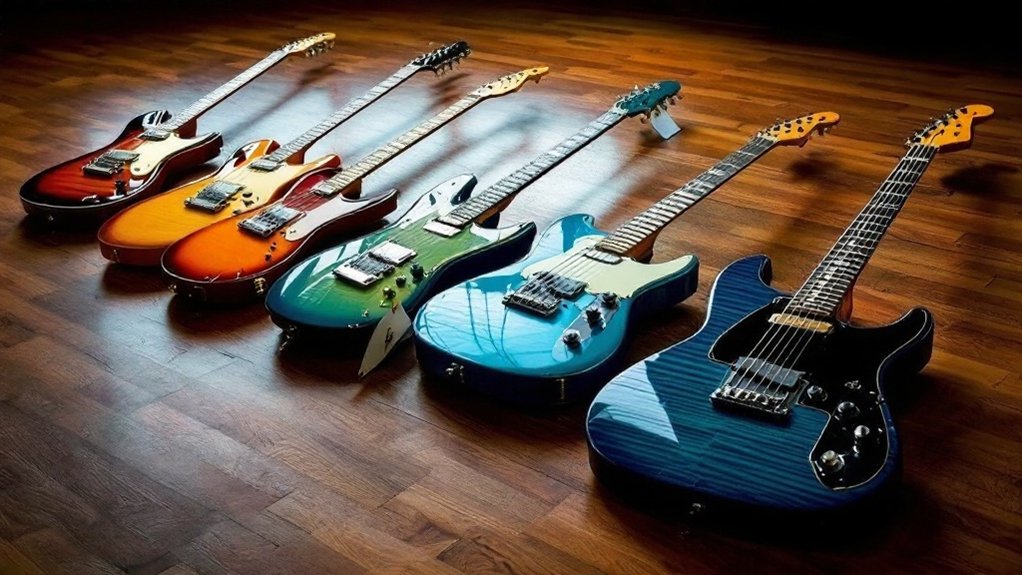
While exploring the vast range of Fender guitars, you’ll find distinct quality tiers that correlate directly with price points across the lineup.
The newly released Standard Series offers authentic Fender craftsmanship under $600, while Player II models deliver enhanced components around $1,000. Additionally, the use of high-quality pickups in these models contributes significantly to their overall sound quality. Many players appreciate the solid body types that enhance resonance and sustain, making these guitars appealing for various musical styles.
Moving up, you’ll discover the American Vintage II series, where vintage authenticity meets premium materials and historically accurate specs.
Each tier represents a calculated balance between cost and quality.
You’re investing in progressively better pickups, hardware, and finishes as you climb the price ladder, with high-end models offering superior tonality and collector-worthy construction that justify their premium positioning. Additionally, many Fender models, like the Fender Mustang LT25, feature innovative technology that enhances the overall playing experience.
Manufacturing Locations and Their Impact on Cost
Understanding where your Fender guitar is manufactured directly impacts its price point in today’s market. A cost analysis reveals clear price tiers based on manufacturing location, with significant variations in production expenses and market positioning.
| Manufacturing Location | Cost Impact |
|---|---|
| Corona, USA | Premium pricing, highest craftsmanship costs |
| Ensenada, Mexico | Mid-range pricing, balanced value |
| Korea | Entry-level professional pricing |
| Indonesia/China | Budget-friendly pricing |
You’ll find manufacturing impact most pronounced between U.S. Custom Shop models and Asian-made instruments, with Mexican production offering the sweet spot between quality and affordability. This strategic manufacturing approach lets you access Fender’s legacy across multiple price points, matching your investment to your playing aspirations. Additionally, considering the type of wood used in production can significantly influence the overall sound and tone quality of the instrument. The choice of wood type can also affect the weight of the guitar, making it an essential factor for comfort during play. A well-designed guitar body can enhance tonal quality and resonance, further contributing to your playing experience.
Global Market Factors Affecting Fender Prices
As global market dynamics continue to reshape the guitar industry, you’ll notice several key factors driving Fender’s pricing strategies across different regions.
Global demand patterns and material costs greatly influence what you’ll pay for your next Fender guitar, with market forces creating both challenges and opportunities.
- Rising steel and titanium costs directly impact production expenses, affecting retail pricing
- Strong Asia-Pacific growth (45% market share) creates pressure on global supply chains
- North America’s 8.3% CAGR drives premium segment expansion
- Economic conditions and regional market variations influence local pricing structures
- The rising costs of materials are consistent across the industry, including components like solid-state amplifiers which are crucial for many electric guitar setups.
These market dynamics empower you to make informed decisions about timing and location of your Fender purchase.
Comparing New Vs Used Fender Guitar Values
The choice between new and used Fender guitars presents distinct financial considerations in today’s market.
When comparing new versus used guitar value, you’ll find entry-level Player II models start at $999, while pre-owned equivalents can offer significant savings.
Mid-range American Vintage II series, priced around $2,449, compete with used ’90s models at $1,999.
Custom Shop pieces maintain strong resale value, typically hovering around $3,300 whether new or used.
For maximum investment potential, consider vintage Fenders from the ’50s and ’60s, which can exceed $10,000 due to their collectible status and sustained demand.
Regional Price Variations and Where to Buy
Where you purchase a Fender guitar can greatly impact its final cost, with pricing structures varying across global markets and retail channels.
Regional pricing differences emerge from import duties, VAT rates, and currency fluctuations, while diverse purchase channels offer varying value propositions.
- Official Fender stores maintain MSRP pricing but offer warranty security and seasonal promotions.
- U.S. markets typically show higher base prices due to manufacturing and distribution costs.
- Asian regions near production facilities often feature lower prices from reduced shipping.
- Online marketplaces and authorized dealers compete with exclusive deals and bundled offerings.
Consider exploring multiple purchase channels across regions to optimize your investment, especially during seasonal sales or when exchange rates are favorable.


