

If you want perfect sound quality in 2025, check out the TraderPlus 12 SoundHole Pickup, Imelod Guitar Pickup, and the 12-Hole Acoustic Electric Transducer. The SWIFF Wireless System offers great clarity, while the PAGOW 3 in 1 Transducer is perfect for beginners. You’ll also find options like the Pickup Acoustic Guitar Mini Microphone and a magnetic pickup for acoustic guitars. Each has unique features to evaluate, and you might discover more details and tips ahead.
12 SoundHole Guitar Pickup Acoustic Electric Transducer

If you’re an acoustic guitarist looking for a reliable and affordable solution to amplify your sound, the TraderPlus 12 SoundHole Guitar Pickup Acoustic Electric Transducer is worth considering. This compact device features a magnetic preamplifier with tone and volume control, ensuring you can customize your sound. With a 10-foot cable and easy installation, you simply plug it into your guitar’s sound hole. While it produces clean sound with low feedback, some users report buzzing issues and limited tone control. It’s designed for steel strings, making it unsuitable for nylon string guitars. Overall, it offers great value for various acoustic instruments.
Best For: Acoustic guitarists seeking an affordable and easy-to-install pickup solution for amplifying steel-string guitars.
Pros:
- Produces clean sound with low feedback.
- Easy installation with a 10-foot cable.
- Versatile and suitable for various acoustic instruments.
Cons:
- Some users report buzzing issues and limited tone control.
- Not suitable for nylon string guitars.
- May not fit all guitars properly, requiring adjustments.
Imelod Guitar Pickup Contact Microphone Transducer for String Instruments

The Imelod Guitar Pickup Contact Microphone Transducer is an excellent choice for musicians looking to amplify a variety of string instruments, including acoustic guitars, violins, and banjos, without the hassle of drilling. Its unique spaceship shape and durable materials, such as high-grade ABS and oxygen-free copper cable, guarantee reliable performance. You can easily adjust the volume for feedback, and the 9.8ft cable provides ample reach. With low distortion and customizable placement, you’ll achieve high-quality sound. Plus, you’ll find helpful accessories like double-sided tape and a microfiber bag for storage. It’s a versatile tool for any string instrument enthusiast.
Best For: Musicians seeking a hassle-free way to amplify various string instruments like acoustic guitars, violins, and banjos without drilling.
Pros:
- Versatile Compatibility: Works with a wide range of string instruments.
- No Drilling Required: Easy to install with direct contact functionality.
- High-Quality Sound: Low distortion and customizable placement for optimal sound quality.
Cons:
- Average Customer Ratings: Only 3.6 out of 5 stars based on feedback.
- Limited Length of Cable: While 9.8ft is decent, it may not be sufficient for larger setups.
- Durability Concerns: Some users may question long-term durability despite sturdy materials.
12-Hole Acoustic Electric Transducer with Magnetic Preamplifier, Guitar Capo & Audio Cable

For musicians seeking a reliable way to amplify their acoustic instruments, the 12-Hole Acoustic Electric Transducer with Magnetic Preamplifier stands out as an excellent choice. This versatile transducer is compatible with guitars, ukuleles, and more, ensuring you get the best sound possible. It features a padded clip for easy installation without drilling, plus volume and tone controls for precision. You’ll appreciate the included guitar capo and 10 FT audio cable for added convenience. While some users report mixed feedback on sound quality, many praise its low feedback and clean sound, making it a solid option for your musical needs.
Best For: Musicians looking for an easy-to-install and versatile acoustic amplifier for various string instruments.
Pros:
- Easy installation with a padded clip that requires no drilling.
- Includes useful accessories such as a guitar capo and a 10 FT audio cable.
- Low feedback and clean sound quality suitable for a range of musical styles.
Cons:
- Mixed feedback on sound quality and installation ease from some users.
- Volume and tone controls may not perform consistently according to customer reviews.
- Limited compatibility with instruments that do not meet the size and string requirements.
SWIFF High-Grade Electronic Guitar Wireless System
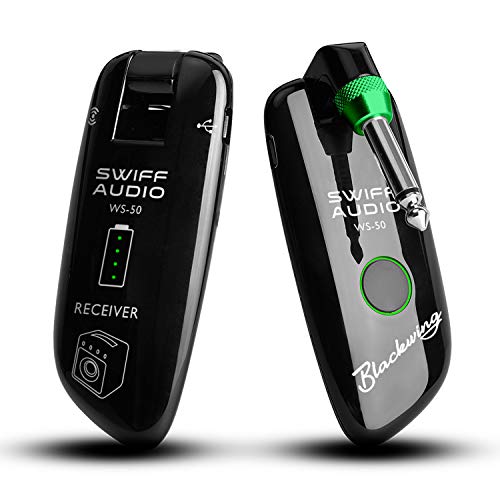
Musicians seeking a reliable and high-quality wireless solution will find the SWIFF High-Grade Electronic Guitar Wireless System an excellent choice, thanks to its advanced UHF frequency transmission technology. With a sampling frequency of 24bit/48kHz and a transmission range of 164ft, you’ll experience sound clarity and minimal delay. The compact, lightweight design makes it easy to transport, while the 220° rotatable plug guarantees hassle-free setup. Rechargeable batteries provide about five hours of playtime, although some users note battery life concerns with the receiver. Overall, it’s a top pick for those wanting superior sound without the limitations of wired connections.
Best For: Musicians looking for a high-quality, portable wireless solution for electric instruments that offers excellent sound clarity and minimal delay.
Pros:
- Excellent sound quality with a sampling frequency of 24bit/48kHz and a wide frequency response range.
- Compact and lightweight design, making it easy to transport for gigs and practices.
- 220° rotatable plug for easy setup and compatibility with most electric instruments.
Cons:
- Battery life concerns, particularly for the receiver, with only about five hours of playtime.
- Some reports of quality control issues and product longevity from users.
- Potential confusion with similar models not from the same manufacturer, which may not offer the same reliability.
PAGOW 3 in 1 Microphone Contact Piezo Transducer for Acoustic Instruments
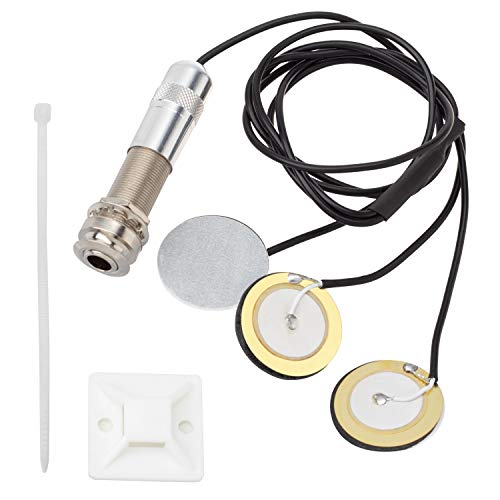
Offering versatility for a range of string instruments, the PAGOW 3 in 1 Microphone Contact Piezo Transducer stands out as an excellent choice for those looking to enhance their acoustic sound quality. Weighing just 1.06 ounces, it’s lightweight and easy to install without batteries or soldering. With its self-adhesive feature, you can mount it quickly, making it perfect for various instruments like violins, ukuleles, and banjos. While users appreciate its sound quality for the price, keep in mind it may require a preamp for peak performance. Overall, it’s a solid option for beginners and casual players wanting to elevate their sound.
Best For: Beginners and casual players looking to enhance the sound quality of their acoustic string instruments without complex installation.
Pros:
- Easy installation with no batteries or soldering required.
- Self-adhesive feature allows for quick mounting on various instruments.
- Good sound quality for the price, making it ideal for DIY projects.
Cons:
- Some users reported issues with low output and fragile wiring.
- Performance can vary based on the type of instrument used.
- May not meet expectations for high-end instruments without additional equipment like a preamp.
Pickup Acoustic Guitar Mini Microphone Transducer with Cable

The Pickup Acoustic Guitar Mini Microphone Transducer with Cable is an ideal choice for acoustic guitarists and string instrument enthusiasts seeking high-quality sound without the hassle of complex setups. Weighing only 2.89 ounces, this compact transducer offers universal compatibility with acoustic guitars, violins, and more. Its thoughtful design features a 6.35mm output plug and a 3-meter cable for easy connectivity. Enjoy superior sound quality with adjustable volume control to prevent noise squeals. Installation is a breeze, thanks to its removable, self-adhesive design. While some users mention the cord’s fragility, overall feedback highlights its value and clean sound performance.
Best For: Acoustic guitarists and string instrument players looking for a lightweight and easy-to-install microphone transducer to enhance their sound quality.
Pros:
- Superior sound quality with adjustable volume control to minimize noise.
- Universal compatibility with various string instruments including guitars and violins.
- Easy installation with a removable, self-adhesive design.
Cons:
- Some users have reported concerns about the fragility of the cord.
- The cord length may be insufficient for some setups.
- A few users found the adhesive to be sticky, which can be an issue during removal.
12 Sound Hole Guitar Pickup, Magnetic Pickup Transducer for Acoustic Guitar

For acoustic guitarists seeking an effective way to amplify their sound, the 12 Sound Hole Guitar Pickup stands out with its magnetic pickup transducer design. This high-quality device fits most acoustic guitars with a 6.35mm sound hole. You’ll appreciate its easy installation—just slide it into the sound hole, secure it with clamps, and adjust for perfect alignment with the strings. The included volume and tone controls offer flexibility, though be mindful that some users report buzzing noises. Weighing only 200g, it’s an affordable solution for great amplification, making it a popular choice among guitar enthusiasts.
Best For: Acoustic guitarists looking for an affordable and easy-to-install pickup solution to amplify their sound.
Pros:
- Easy installation process with minimal tools required.
- Good amplification quality for the price, making it a great value.
- Lightweight design at only 200g.
Cons:
- Volume knob functions as an on/off switch, limiting sound variance.
- Tone adjustment can introduce buzzing noises, affecting sound quality.
- Some users report difficulty during installation, risking potential scratches on the guitar.
Factors to Consider When Choosing Guitar Transducers
When choosing guitar transducers, you need to think about several key factors. Compatibility with your instrument and the sound quality performance are essential for achieving the best tone. Also, consider installation ease, control over tone and volume, and the quality of the cables to guarantee a seamless setup.
Compatibility With Instruments
Choosing the right guitar transducer hinges on ensuring compatibility with your instrument. First, make sure the transducer is specifically designed for your type of guitar—some are better for acoustic guitars with steel strings, while others cater to a broader range like violins and banjos. Check the specifications for sound hole diameter, as many transducers fit standard sizes. Consider if the transducer needs modifications like drilling or adhesive, which could affect compatibility. If you own multiple instruments, look for versatile transducers that work with acoustic guitars, ukuleles, and even cellos. Finally, read user reviews to learn about compatibility experiences, helping you make an informed choice for peak performance with your instrument.
Sound Quality Performance
Sound quality performance is essential for guitar transducers, as it directly impacts your overall sound experience. When choosing a transducer, consider its ability to produce clean sound with minimal distortion and low feedback during amplification. Transducers with magnetic preamplifiers often offer volume and tone control, allowing you to tailor your sound for various musical styles. Pay attention to the construction materials, as high-grade options generally enhance sound transmission and reduce noise interference. Additionally, the placement of the pickup can greatly affect tonal characteristics, so don’t hesitate to experiment with different locations for diverse sound profiles. User reviews often emphasize the importance of stable sound transmission with low noise, proving that not all transducers perform equally across different instruments.
Installation Ease and Clarity
While exploring guitar transducers, it’s vital to prioritize installation ease and clarity, as a straightforward setup can greatly enhance your playing experience. Look for plug-and-play designs that eliminate the need for drilling or complicated setups. Clear installation instructions are important; vague guidance can lead to frustration and hinder your progress. Choose transducers with adjustable clips or mounts, allowing better positioning within the sound hole for improved sound quality and protection against damage. Always evaluate user feedback regarding installation experiences, since some products might need additional adjustments for peak performance. Finally, verify the transducer has cushioning or protective elements to safeguard your guitar from scratches during installation and use, keeping your instrument in top shape.
Tone and Volume Control
Once you’ve guaranteed a smooth installation of your guitar transducer, the next aspect to contemplate is tone and volume control. These features let you adjust your sound output, enhancing your performance across various musical styles. Many transducers come with built-in controls, allowing for real-time adjustments to prevent feedback and optimize sound quality. However, the effectiveness of tone control can differ among models; some may even produce buzzing noises during adjustments. You’ll want controls that are easy to manipulate while playing, as this greatly impacts your overall playability. A well-functioning volume control is essential to avoid unwanted noise, ensuring a cleaner sound vital for live performances and recordings. Choose wisely to enhance your musical experience!
Cable Length and Quality
When selecting a guitar transducer, cable length and quality are essential factors that can greatly impact your performance and overall sound. You’ll want to choose a cable length that suits your style, typically ranging from 9.8 to 10 feet, providing flexibility during performances. High-quality cables made from oxygen-free copper and wrapped in durable nylon jackets minimize noise interference and enhance sound transmission. While shorter cables might restrict your movement, longer ones offer freedom but can introduce signal loss if not well-constructed. Make sure you pick a standard connector type, like 3.5mm or 6.35mm, for easy compatibility with amplifiers. Finally, consider the cable’s weight and flexibility for portability, especially if you travel frequently.
Durability and Build Materials
Durability is an essential factor in the performance of guitar transducers, as it directly affects their lifespan and reliability on stage. When choosing a transducer, consider the materials used in its construction. High-grade ABS plastics and oxygen-free copper cables contribute to longevity and signal quality. Look for sturdy, abrasion-resistant jackets, like nylon, that protect internal components from wear and tear. The design matters, too; features like self-adhesive mounts and reinforced cabling enhance resilience against physical stress and environmental factors. Transducers with quality metal components usually offer better durability than those made mostly of plastic. Finally, installation methods such as padded clips or adhesive pads can minimize potential damage to both the transducer and your instrument, ensuring consistent performance.
Price and Value Considerations
Choosing the right guitar transducer can be a significant investment, and understanding price and value considerations is key to making an informed decision. Prices for transducers can range from around $20 to over $100, so it’s essential to evaluate the price-to-performance ratio. If you’re a casual player, a budget model might suffice, but professional musicians often need higher-end options for studio work. Check customer ratings between 3.6 to 4.4 stars for insights into user satisfaction. Additionally, consider warranty and customer support options, as they can enhance the overall value of your purchase. Remember, higher-priced transducers generally offer better materials and sound quality, making them a worthwhile investment for serious players.
User Experience and Setup
Understanding how user experience and setup play a role in selecting guitar transducers can greatly impact your satisfaction with the product. Easy installation is vital; many transducers require minimal tools, often just inserting a pickup into the sound hole or adhering it with double-sided tape. However, some users struggle with unclear instructions, which may lead to adjustments for ideal sound quality. Height adjustments could also be necessary to avoid unwanted noise or feedback. It’s important to confirm compatibility with your specific instrument, as not all transducers fit every acoustic guitar or string instrument perfectly. Ultimately, user feedback emphasizes that sound quality varies greatly depending on the installation technique and the type of instrument used, so choose wisely.


