

To master your guitar skills, consider these top seven books: “Guitar Scales Handbook” offers clear lessons on scales and theory. The “Ultimate Guitar Chords, Scales & Arpeggios Handbook” gives a structured approach suitable for all levels. “The Guitarists Scale Book” features over 400 scales for thorough learning. “Guitar Scales 365” includes daily exercises to boost practice. “The Ultimate Scale Book for Guitar” clarifies various soloing techniques. Curious about the others? You’ll want to explore what they offer next.
Guitar Scales Handbook: A Step-By-Step Guide to Scales and Music Theory

If you’re a beginner or a self-taught guitarist looking to deepen your understanding of scales and music theory, the “Guitar Scales Handbook” is perfect for you. This step-by-step guide features 100 lessons that break down scales and fretboard theory in an accessible way. With simple guitar tabs and finger numbers, you won’t need to read music to follow along. Each one-page lesson keeps things digestible, and instructional videos enhance your learning experience. It’s suitable for busy individuals and musicians of all ages, helping you build essential skills at your own pace while making practice enjoyable with jam tracks.
Best For: Beginners, self-taught guitarists, and seasoned players seeking to enhance their understanding of scales and music theory.
Pros:
- Provides a step-by-step approach with 100 lessons that are easy to digest.
- Uses simple guitar tabs and finger numbers, making it accessible for those who cannot read music.
- Includes instructional videos and jam tracks to enhance practice and make learning enjoyable.
Cons:
- Some users find it lacks foundational explanations for absolute beginners.
- The 5-string presentation of modal scales may confuse those new to the topic.
- Limited coverage of scales across all strings could hinder a comprehensive understanding.
Ultimate Guitar Chords, Scales & Arpeggios Handbook

The “Ultimate Guitar Chords, Scales & Arpeggios Handbook” is an excellent choice for guitarists at any skill level, especially beginners seeking a structured approach to learning. This handbook simplifies music theory and essential topics like chords and scales, ensuring you won’t feel overwhelmed. You’ll appreciate the accompanying instructional videos that enhance your understanding and allow for self-paced progress. With practical applications and jam tracks, you can start playing quickly and measure your improvement. While some users suggested adding more practice exercises, overall, this handbook is a valuable resource that can reignite your passion for guitar playing.
Best For: The “Ultimate Guitar Chords, Scales & Arpeggios Handbook” is best for guitarists of all skill levels, particularly beginners looking for a structured and accessible way to learn guitar.
Pros:
- Clear organization of lessons makes it easy to understand chords, scales, and music theory.
- Accompanying instructional videos allow for self-paced learning and visual guidance.
- Practical applications and jam tracks help users start playing quickly and track their improvement.
Cons:
- Some users noted the absence of specific fingering charts for certain arpeggios.
- A lack of practice exercises may leave some learners wanting more hands-on activities.
- Theory-heavy sections could be less engaging for those focused on practical playing.
The Guitarists Scale Book: Over 400 Guitar Scales & Modes

For beginners enthusiastic to master the fretboard, “The Guitarists Scale Book: Over 400 Guitar Scales & Modes” stands out as an essential resource. This book offers over 400 scales and modes, making it a must-have for your learning journey. It breaks down theory and fretboard understanding clearly, with scales presented in various positions alongside tablature and notation. While it organizes scales alphabetically and lacks video resources, it encourages you to explore and apply your knowledge practically. Users appreciate the clarity of explanations, making it a valuable tool for honing your skills and expanding your musical vocabulary.
Best For: Beginners looking to effectively learn guitar scales and modes on the fretboard.
Pros:
- Comprehensive resource with over 400 scales and modes for a broad learning experience.
- Clear explanations of theory and fretboard understanding make it accessible for new players.
- Scales presented in multiple positions with tablature and notation aid in practical application.
Cons:
- Alphabetical organization of scales may be confusing for some users.
- Lacks video resources for a more interactive learning experience.
- Binding could be improved for easier use during practice sessions.
Guitar Scales 365: Daily Guitar Exercises and CAGED System

Guitar Scales 365: Daily Guitar Exercises and CAGED System is ideal for both beginners enthusiastic to master the fretboard and experienced players seeking to refine their skills. Authored by Kirk Tatnall, this book offers a structured approach to daily exercises covering major, minor, pentatonic scales, and modes. Users appreciate its logical explanations and effective pacing, allowing you to progress at your own speed. Many find themselves dedicating about an hour and a half daily to these exercises. It’s a must-have resource that enhances your understanding of scales and fretboard navigation, making it a valuable addition to your guitar instruction library.
Best For: This book is best for both beginners eager to master their guitar skills and experienced players looking to enhance their understanding of scales and fretboard navigation.
Pros:
- Provides a structured, progressive approach to daily guitar exercises for various scales and modes.
- Offers clear and logical explanations that are easy to follow for players of all skill levels.
- Encourages consistent practice, making it a valuable tool for improving guitar techniques.
Cons:
- May require a significant daily time commitment of about an hour and a half, which could be challenging for some users.
- Some advanced players might find the material too basic if they already have a strong understanding of scales.
- Lacks multimedia elements, such as audio or video, which could enhance the learning experience.
The Ultimate Scale Book for Guitar

If you’re looking to enhance your guitar skills, especially in understanding scales, then “The Ultimate Scale Book for Guitar” is your go-to resource. This extensive guide covers major, minor, blues, and exotic scales, with easy-to-read fretboard diagrams. You’ll appreciate its clarity and concise explanations, making complex ideas easy to grasp. Users report improvements in their playing, memorizing scales effectively for better soloing and improvisation. The structured approach includes drills and practical exercises, catering to both beginners and advanced players. Despite its compact size, it’s a valuable reference for deepening your understanding of guitar scales.
Best For: Guitarists of all skill levels looking to improve their understanding of scales for soloing and improvisation.
Pros:
- Clear and concise explanations make complex concepts easy to understand.
- Comprehensive coverage of various scales, including major, minor, and exotic scales.
- Structured approach with drills and exercises suitable for both beginners and advanced players.
Cons:
- Compact size may lead to challenges with readability during practice.
- Small page format can make it difficult to use as a primary practice tool.
- Some users may find the need to memorize scales down the neck cumbersome.
Guitar Fretboard Memorization Guide
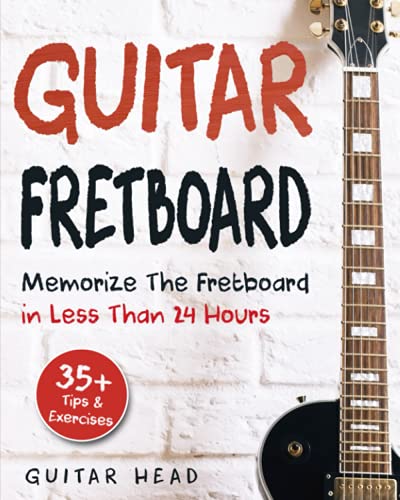
Looking to master the fretboard quickly? The Guitar Fretboard Memorization Guide can help you do just that. This book simplifies learning by breaking down complex concepts into manageable steps. Start by memorizing the open string notes (EADGBE) and then explore the relationships between notes. You’ll find practical exercises and mnemonic devices that make it easier to remember note positions. While aimed at beginners, even those with some music theory knowledge will benefit. Although some users wish for better visuals, the content is effective. Many have successfully transformed their fretboard understanding and boosted their playing confidence with this guide.
Best For: The Guitar Fretboard Memorization Guide is best for beginners and those returning to guitar after a break, as well as individuals with some prior music theory knowledge seeking to enhance their understanding of the fretboard.
Pros:
- Provides a straightforward approach to memorizing the fretboard quickly, with many users achieving results in under an hour.
- Includes practical exercises and mnemonic devices that aid in remembering note positions across different strings and frets.
- Users report increased confidence in playing and a clearer understanding of song analysis after using the guide.
Cons:
- Some users find the visual design lacking, particularly regarding font size and graphics, which could be improved for better readability.
- May not be as beneficial for experienced musicians who already have a solid understanding of the fretboard.
- Suggestions for color visuals and larger fonts indicate a need for enhancements in the book’s presentation.
Sliding Ruler for Guitar – Original Guitar Scale Chart

For musicians enthusiastic to master their scales, the Sliding Ruler for Guitar™ serves as an invaluable tool, offering a clear and color-coded layout that simplifies the learning process. This original guitar scale chart covers pentatonic, diatonic, and modes, making it suitable for all skill levels. Its compact design fits easily into your practice routine, allowing you to explore scale patterns in any key. With a user-friendly format, you’ll reveal the secrets of the fretboard while enhancing your soloing skills. Plus, the risk-free guarantee secures your satisfaction, making it a worthwhile investment for serious players.
Best For: The Sliding Ruler for Guitar™ is best for musicians of all skill levels looking to master guitar scales with a user-friendly and visual learning tool.
Pros:
- Color-coded layout simplifies understanding of scale positions and connections.
- Compact and portable design allows for easy integration into practice sessions.
- Risk-free guarantee ensures customer satisfaction with the product.
Cons:
- Some users find the instructions confusing, which may hinder initial use.
- Considered slightly pricey by some, though many view it as a worthwhile investment.
- Limited guidance on advanced techniques may not fully meet the needs of expert players.
Factors to Consider When Choosing Guitar Scale Books
When choosing guitar scale books, think about your target skill level and how you learn best. Consider the content structure and whether it includes visual aids to enhance your understanding. Practical application is key, so look for books that offer exercises to help you apply what you learn.
Target Skill Level
Choosing the right guitar scale book can greatly impact your learning experience, especially since different materials cater to various skill levels. If you’re a beginner, look for books that emphasize foundational concepts, practical exercises, and clear instructions. They often use simple tablature, making it easier to grasp without prior music theory knowledge. As an intermediate player, you’ll want materials that build on what you know, introducing intricate patterns and techniques for better fretboard navigation and improvisation. For advanced guitarists, seek out books that explore a wide array of scales, including exotic and modal options. This will allow for a deeper understanding of music theory and enhance your creative expression in playing. Choose wisely to align with your goals!
Learning Methodology
While selecting a guitar scale book, it’s essential to take into account the learning methods it employs to guarantee they match your personal style. Look for books that use simple guitar tablature and finger numbers, especially if reading music isn’t your strong suit. Materials that include instructional videos can enhance your understanding and provide visual guidance. Choose resources with lessons presented in a digestible format, like one-page lessons, for easy navigation and self-paced learning. Opt for books that emphasize practical applications, so you can start playing quickly and measure your progress through engaging exercises. Finally, make sure the book’s structure allows for gradual progression in difficulty, catering to both beginners and advanced players alike.
Content Structure
A well-structured guitar scale book can make all the difference in your learning experience. Look for books that present scales and modes in multiple positions, complete with clear tablature and notation to help you easily apply them on the fretboard. It’s essential that the content builds progressively, allowing you to advance from basic concepts to more complex ideas at your own pace. Guarantee the lessons are organized logically, whether alphabetically or by scale type, to enhance your understanding and navigation. Also, consider supplementary resources like practice exercises or instructional videos that reinforce learning and provide practical applications. All these factors will guarantee you get the most out of your guitar scale book.
Visual Aids
Effective learning goes hand in hand with the right visual aids in guitar scale books. Diagrams and tablature simplify your understanding of scale shapes and finger placements on the fretboard. Look for color-coded layouts that make it easier to identify scale positions and the relationships between notes. Fretboard diagrams that show scales across multiple positions help you visualize how they span the neck, enhancing memorization. Instructional videos paired with these visual aids can provide a dynamic experience, allowing you to see and hear scales in context. Clear and concise visuals markedly reduce cognitive load, making complex concepts easier to grasp than text-heavy explanations. Prioritize books that utilize these visual tools for a more effective learning journey.
Practical Application
When choosing guitar scale books, it’s essential to prioritize practical application to enhance your learning experience. Look for books that emphasize exercises and drills, allowing you to implement what you’ve learned right away. Make sure the resource includes jam tracks or backing tracks, making your practice sessions more engaging and relevant. Real-world examples of how scales are used in improvisation and soloing can also boost your creative skills. Visual aids like fretboard diagrams and scale patterns simplify learning and improve retention. Finally, select materials that encourage exploring scales across different positions and keys, helping you develop versatility and a deeper understanding of the fretboard. This practical approach will elevate your playing and boost your confidence.
Supplementary Resources
Choosing the right guitar scale books goes beyond just the content within the pages; it also involves considering supplementary resources that can enhance your learning. Instructional videos, for instance, provide visual demonstrations of scale concepts, making tough topics easier to grasp. Look for books that recommend practice exercises to reinforce your understanding and application of scales in different musical contexts. Combining scale books with chord charts and arpeggio guides can deepen your grasp of music theory and fretboard navigation. Don’t overlook online platforms and communities; they offer valuable peer feedback and jam tracks. Finally, interactive tools like apps or scale charts can make practicing more engaging and suited to your individual learning style.
User Experience
Selecting a guitar scale book requires careful consideration of user experience factors that can greatly impact your learning journey. Look for books with clear explanations and well-organized content; step-by-step formats often make learning easier. Interactive components, like instructional videos and jam tracks, boost engagement and help you apply concepts practically. Pay attention to the pacing of lessons; you’ll want a book that allows you to progress at your own speed without feeling rushed. Additionally, find resources that simplify complex theories into digestible sections, enhancing your understanding. Finally, effective practice tools, such as fingering charts and visual aids, can greatly boost your confidence and success in mastering scales, ultimately influencing your overall satisfaction.
Price and Value
Price and value are essential factors that can influence your decision when you’re looking for the right guitar scale book. First, evaluate the price relative to the number of lessons and depth of content; some books provide hundreds of scales and modes at competitive prices. Check for added resources like instructional videos or practice exercises, which can enhance the book’s value. Clarity of explanations and organization matter too; a well-structured book saves you time and effort. Consider the target audience—beginner books often cost less, while extensive guides for advanced players may be pricier. Finally, don’t forget to read user reviews for insights; they can reveal if the material is worth your investment based on others’ experiences.


