

When you’re looking to keep your guitar sound clean and crisp, choosing the right noise suppressor is key. The Boss NS-2 and Donner Noise Gate offer adjustable noise reduction and excellent build quality. Rowin and SONICAKE provide compact, durable options with easy controls. Don’t overlook the DAddario Screeching Halt for acoustic guitars. Each pedal has its strengths, so consider your specific needs. Stay tuned to discover more about these top choices and how they can enhance your performance.
Boss NS-2 Noise Suppressor Pedal

The Boss NS-2 Noise Suppressor Pedal is an ideal choice for guitarists and bassists looking to eliminate unwanted noise and hum from their setups. Its unique noise detection circuit preserves your instrument’s natural sound while adjustable Threshold and Decay knobs let you customize the suppression. Weighing just 1.08 pounds and compact at 6 x 3.8 x 2.7 inches, it fits easily into any rig. Users rave about its effectiveness, especially in high-gain situations, improving sound quality and reducing feedback. Just remember, it may not tackle single-coil noise, so test it in your environment for the best results.
Best For: Guitarists and bassists seeking an effective solution for eliminating noise and hum while preserving their instrument’s natural sound.
Pros:
- Significant noise reduction in high-gain setups, enhancing overall sound quality.
- Adjustable Threshold and Decay knobs for tailored noise suppression to fit individual needs.
- Compact and durable design that integrates easily into various rig setups.
Cons:
- Not effective for single-coil noise or certain types of amp buzz and crackling.
- Performance may vary in environments with poor wiring or strong electromagnetic interference.
- Recommended to test in your specific environment before purchasing for optimal results.
Donner Noise Gate Pedal for Electric Guitar and Bass

If you’re a guitarist or bassist seeking to eliminate unwanted noise without sacrificing your tone, the Donner Noise Gate Pedal is an excellent choice. Weighing just 8.8 ounces, this sturdy green pedal features hard and soft modes for tailored noise reduction ranging from -70 to +10 dB. Its true bypass keeps your sound transparent when disengaged, while fast noise detection guarantees clarity without cutting off notes. With a simple control layout, it fits perfectly on your pedalboard. Compatible with various setups, the Donner Noise Gate is ideal for rock, metal, and ambient genres, making it a versatile addition to your rig.
Best For: Guitarists and bassists looking to effectively reduce unwanted noise while maintaining their original tone.
Pros:
- True Bypass feature preserves tone quality when the pedal is not in use.
- Fast noise detection ensures clarity without cutting off musical notes.
- Compact and rugged design fits easily on any pedalboard.
Cons:
- Requires a DC 9V adapter, which is not included.
- Some users may find the noise reduction range insufficient for extreme setups.
- Limited to electric guitar and bass, not suitable for other instruments.
Rowin Guitar Noise Killer Noise Gate Suppressor Effect Pedal LEF-319

For guitarists seeking a compact solution to unwanted noise, the Rowin Guitar Noise Killer Noise Gate Suppressor Effect Pedal LEF-319 stands out with its impressive noise reduction capabilities. Weighing only 8 ounces and measuring just 3.74 x 1.77 x 1.89 inches, it’s perfect for saving space on your pedal board. With adjustable noise reduction from -70 to +10 dB, you can choose between Hard Mode for strong suppression or Soft Mode for a gentler approach. Its high-quality zinc alloy construction guarantees durability, while true bypass maintains your tone. Just remember to use a DC 9V power supply for peak performance.
Best For: Guitarists looking for a compact and effective solution to eliminate unwanted noise from their sound without sacrificing tone quality.
Pros:
- Compact and lightweight design makes it ideal for pedal board space management.
- Adjustable noise reduction levels allow for customized performance, catering to various playing styles.
- Durable construction ensures long-lasting use, paired with true bypass functionality for maintaining original sound quality.
Cons:
- Requires a DC 9V power supply, which is not included, limiting immediate usability.
- Potential issues with rubber mount adhesion may affect compatibility with velcro pedal boards.
- Noise reduction effectiveness may vary based on the type of pickups used and overall setup.
Noise Gate Guitar Pedal, Intelligent Noise Suppressor

Guitarists seeking a reliable solution for managing unwanted noise during performances will find the Noise Gate Guitar Pedal, Intelligent Noise Suppressor, to be an invaluable tool. Its dynamic noise filtering intelligently eliminates amp hum while preserving essential harmonics, ensuring your arpeggios remain crystal clear. With oversized knobs, you can quickly adjust the threshold, whether you’re silencing tight metal chugs or keeping ambient trails during set changes. Built with lightweight, durable aluminum, this pedal withstands rigorous gigs and integrates seamlessly into any pedal collection. Enjoy noise-free sound from bedroom practice to professional stages with this essential addition to your rig.
Best For: Guitarists looking for an effective way to control unwanted noise during performances while preserving their instrument’s tonal integrity.
Pros:
- Intelligent circuitry effectively eliminates amp hum while preserving desirable harmonics.
- Oversized control knobs allow for quick and easy threshold adjustments during live performances.
- Durable aluminum housing ensures reliability and portability for touring musicians.
Cons:
- May require some trial and error to find the perfect settings for different playing styles.
- Limited features compared to more advanced noise suppression systems.
- Some users may find the price point higher than basic noise gate options.
SONICAKE Noise Gate Effects Pedal for Guitar

Looking for a reliable way to eliminate unwanted noise during your performances? The SONICAKE Noise Gate Effects Pedal is your go-to solution. This compact, 100% analog pedal features a true bypass footswitch and an easy-to-use one-knob control for threshold adjustments. With two modes—FAST or SMOOTH—you can tailor your noise reduction to fit any situation. Weighing just 7.7 ounces, it won’t weigh you down. Users love its effectiveness and affordability, often comparing it favorably to pricier options. While minor ground hum issues have been noted, the overall satisfaction with sound quality makes it a worthy investment for any guitarist.
Best For: Guitarists seeking an affordable and effective solution for noise management during performances.
Pros:
- Great value for the price, offering effective noise suppression.
- Compact and lightweight design for easy transport.
- True bypass feature maintains tone and dynamics during use.
Cons:
- Some users have reported minor ground hum issues.
- A+B mode can disengage the pedal button, causing inconvenience.
- Occasional operational issues noted by a few users.
DAddario Screeching Halt Acoustic Guitar Soundhole Cover
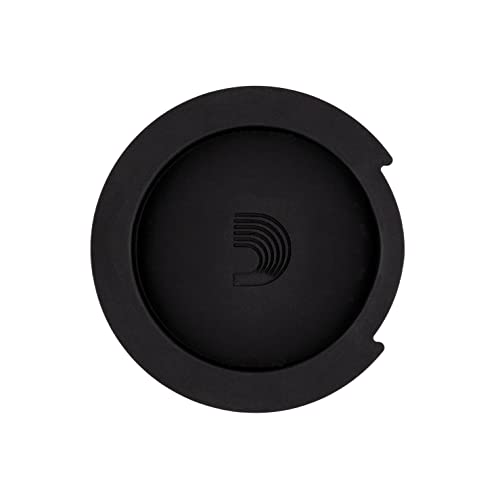
The DAddario Screeching Halt Acoustic Guitar Soundhole Cover is an essential tool for performers seeking to eliminate unwanted feedback during live shows. This sleek black cover enhances your stage volume, ensuring a crisp and clean sound quality. Installation is a breeze—just slide it into your guitar’s 4-inch sound hole without any tools. Its soft rubber insert provides a secure fit without damaging your instrument’s finish, preserving its original condition. Compatible with various acoustic and electric guitars, this cover is perfect for any musician looking to maintain their sound while keeping feedback at bay.
Best For: Musicians and performers looking to eliminate feedback and enhance sound quality during live acoustic performances.
Pros:
- Eliminates feedback for clearer sound during performances.
- Quick and easy installation with no tools required.
- Compatible with various instruments, preserving their original condition.
Cons:
- Limited to standard 4-inch sound holes, which may not fit all guitars.
- May not completely eliminate feedback in all performance settings.
- Soft rubber insert might wear out over time with frequent use.
Noise Gate Pedal for Electric Guitar and Bass

For those who play electric guitar or bass and struggle with unwanted noise, the AFOT Noise Gate Pedal serves as an effective solution. This compact pedal features two modes—Hard for aggressive noise reduction and Soft for a smoother touch. Its true bypass design guarantees your tone remains intact without unwanted pops or hums. You can adjust the noise reduction from -70 to +10 dB, tailoring it to your needs. Priced under $30, it’s an affordable choice for home practice or gigs. Just remember, it requires an external 9V power supply, as it’s not self-powered.
Best For: Musicians seeking an affordable and effective noise reduction solution for electric guitar and bass in various performance settings.
Pros:
- Versatile performance with effective noise reduction for high-gain amps, suitable for genres like metal, hard rock, and blues.
- Compact design makes it ideal for travel and easy integration into pedalboards with minimal controls.
- True bypass feature ensures no loss of tone, eliminating unwanted pops and hums during use.
Cons:
- Requires an external 9V power supply, which may not be convenient for all users.
- Performance variability in Soft mode, with some users noting tracking limitations and potential tone artifacts.
- Not a tuner, which can lead to confusion for those looking for a multi-functional pedal.
Factors to Consider When Choosing Guitar Noise Suppressors
When choosing a guitar noise suppressor, you should consider several key factors. Noise reduction capability, build quality, and power supply requirements can greatly impact your sound and performance. Additionally, think about size, portability, and the available adjustment controls to find the perfect fit for your setup.
Noise Reduction Capability
Choosing a guitar noise suppressor requires careful consideration of its noise reduction capability, since this feature directly impacts your sound quality. Look for models that measure their effectiveness in decibels (dB), with adjustable ranges typically between -70 dB and +10 dB. Effective suppressors use advanced noise detection circuits to maintain your instrument’s natural attack and sustain while cutting unwanted noise. Different modes, like hard and soft settings, let you customize how aggressively you want to suppress noise. Remember, the placement of the suppressor plays an essential role, often yielding better results in effects loops rather than in front of the amp. Finally, a true bypass feature guarantees your tone stays intact when the pedal’s disengaged.
Build Quality and Durability
While you might focus primarily on a noise suppressor’s performance, build quality and durability are equally essential factors that can affect your overall experience. High-quality noise suppressors often use rugged materials like metal or zinc alloy, ensuring they withstand the demands of frequent use. Pay attention to the weight; heavier pedals typically offer more robust construction and can endure wear and tear better than lighter options. Look for true bypass functionality, which helps maintain your tone when disengaged, contributing to the pedal’s longevity. Additionally, durable suppressors are designed to operate reliably in various environments, including those with electromagnetic interference. A solid warranty and positive customer feedback can also indicate a noise suppressor’s long-term reliability and build quality.
Power Supply Requirements
Understanding power supply requirements is key to maximizing your experience with guitar noise suppressors. Most models need a 9V power supply, often provided via a DC adapter, but you should check if it’s included with your purchase. Some suppressors run on batteries, offering portability but requiring regular changes. Make sure the power supply’s polarity matches the pedal’s needs to avoid performance issues. If your noise suppressor has true bypass circuitry, it’ll maintain a clean signal path while disengaged, ensuring your tone stays unaffected. Finally, consider the power consumption, especially if you’re using multiple pedals on a single supply; overloading can lead to performance degradation. Choose wisely to keep your sound crisp and clear!
Size and Portability
When it comes to guitar noise suppressors, size and portability can make a significant difference in your setup. Compact models, measuring around 3.68 x 1.65 x 2.05 inches, easily fit on your pedalboard and simplify transport. Weighing 8 ounces or less, many suppressors are lightweight, allowing you to carry them to gigs without adding extra bulk. Their smaller designs not only save valuable space for more effects but also enhance usability during live performances. Plus, lightweight materials like aluminum or zinc alloy guarantee durability while remaining easy to move. Ultimately, choosing a portable noise suppressor means you can keep your sound clean and crisp without compromising on convenience or flexibility.
Adjustment Controls Available
Adjustment controls are essential in selecting the right guitar noise suppressor for your needs. Look for pedals with adjustable Threshold controls to customize the activation level of the noise gate, tailoring it to your playing style. Some models offer Decay or Release controls, allowing you to fine-tune how quickly the gate opens and closes, which can enhance your performance. Consider noise gates with multiple modes, such as Hard and Soft, to choose between aggressive noise reduction or a gentler approach that preserves your tone. Additionally, a gain control can help you fine-tune the suppression level without sacrificing sound integrity. Finally, check the layout of these controls; oversized knobs can facilitate quick adjustments during live performances.
True Bypass Feature
A true bypass feature is essential for guitarists seeking to maintain their instrument’s original tone. This functionality allows your signal to pass through the pedal without alteration when disengaged, preventing any tone suck or muddiness that can occur with non-bypass designs. Many noise suppressors with true bypass use high-quality components, ensuring a transparent sound that retains your guitar’s natural dynamics. User reviews often emphasize the importance of this feature for players who prioritize tonal purity and clarity. Additionally, true bypass pedals typically have a reliable footswitch that physically disconnects the circuit when not in use, making operation straightforward for musicians. Choosing a pedal with this feature can greatly enhance your overall sound quality.
Price and Value
Choosing the right guitar noise suppressor involves considering both price and value, which can greatly impact your playing experience. Prices for these pedals can range from budget-friendly models under $30 to high-end options exceeding $200, making accessibility a key factor for different players. When evaluating value, look at the build quality and durability; reputable brands often provide better resale value due to performance and longevity. Features like adjustable noise reduction ranges and modes can enhance the pedal’s value, allowing you to manage sound more effectively in various situations. Don’t forget to check customer ratings, as higher satisfaction scores indicate a solid investment. Comparing options within similar price brackets helps you find the best fit for your needs.
Compatibility With Gear
When selecting a guitar noise suppressor, compatibility with your existing gear is essential for achieving the best sound. Verify the noise suppressor has a 1/4-inch audio interface, which allows seamless integration with most electric guitars and basses. Look for pedals that fit both in the effects loop and in front of amplifiers to enhance versatility in your setup. Pay attention to power requirements; some pedals need an external power supply while others are battery-powered, which can impact usability. Check for true bypass functionality to maintain your tone’s integrity when the pedal is disengaged. Finally, assess the pedal’s noise reduction range and modes, especially if you’re using high-gain amplifiers or multiple effects to tailor it to your needs.


