

To master your guitar skills, you need the right method books. The Hal Leonard Guitar Method – Complete Edition is great for beginners, while Fretboard Mastery offers depth for intermediate players. The Essential Elements for Guitar – Book 1 is also excellent for newbies. Don’t overlook the Hal Leonard Guitar Method for Acoustic and Electric Guitar or William Leavitt’s series for more structured learning. Check out additional options to find the perfect fit for your journey.
Hal Leonard Guitar Method – Complete Edition

If you’re a beginner looking to plunge into the world of guitar, the Hal Leonard Guitar Method – Complete Edition is an excellent choice for you. It offers a structured approach with step-by-step lessons covering essential techniques and chords for both acoustic and electric guitars. Clear photos guide your finger placement, making it easy to grasp the basics and even tackle advanced skills like palm muting. For just $10 more, you can access valuable audio lessons, enhancing your learning experience. Many users praise this all-encompassing resource, especially for mastering sheet music and TAB reading, all in one convenient book.
Best For: Beginners eager to learn guitar and those seeking to refresh their skills with a comprehensive method.
Pros:
- Step-by-step instructional material suitable for all skill levels, from beginners to advanced techniques.
- Clear photos for finger placement make learning easier and more intuitive.
- Access to additional audio lessons for enhanced understanding of tunes for just $10 more.
Cons:
- Some buyers reported receiving books in poor condition, such as water damage and unreadable print.
- A few users may find the volume of content overwhelming if not dedicated to regular practice.
- The additional cost for audio lessons may not appeal to everyone, especially those on a tight budget.
Fretboard Mastery – Comprehensive Guitar Educational Book by Troy Stetina

“Fretboard Mastery” by Troy Stetina stands out as a top choice for guitarists keen to deepen their understanding of music theory and fretboard navigation. This thorough book takes a structured approach, starting with intervals before advancing to complex concepts. You’ll appreciate Stetina’s relatable teaching style, which builds your foundational knowledge before diving into more challenging material. The clear explanations, illustrations, and numerous practice examples make learning accessible for all skill levels. While it demands dedication, many players have transformed their guitar skills, making this book a highly recommended resource for anyone serious about mastering the instrument.
Best For: Guitarists of all skill levels looking to enhance their understanding of music theory and fretboard navigation.
Pros:
- Clear explanations and illustrations make complex concepts accessible.
- Structured approach ensures foundational knowledge is built before advancing.
- Effective for both beginners and intermediate players seeking to deepen their skills.
Cons:
- Requires a significant time commitment for practice and study.
- May be challenging for those without a basic understanding of music theory.
- Some users might find the content demanding and intensive.
Hal Leonard Guitar Method – Complete Edition for Acoustic and Electric Guitar

Hal Leonard Guitar Method – Complete Edition | Beginner Guitar Lesson Book for Acoustic and Electric | Step-by-Step Instructional Songbook with Chords and Techniques |Guitar Sheet Music [Spiral-bound] Will Schmid and Greg Koch
The Hal Leonard Guitar Method – Complete Edition is an excellent choice for beginners enthusiastic to learn both acoustic and electric guitar. This extensive resource covers the first three levels, guiding you through note reading, chords, and common patterns. You’ll find clear photos for finger placement, making it easy to follow along. While you can enhance your learning with downloadable audio lessons for just $10, some editions might lack these files. Despite mixed feedback on physical quality, many musicians praise its clarity and effectiveness, making it a legendary introduction to guitar fundamentals that you won’t want to miss.
Best For: Beginners eager to learn the fundamentals of acoustic and electric guitar.
Pros:
- Comprehensive coverage of essential concepts like note reading, chords, and common patterns.
- Clear instructional content with detailed photos for easy finger placement.
- Additional audio lessons available for enhanced learning experience.
Cons:
- Some editions may lack accompanying audio files, limiting the learning experience.
- Feedback on physical quality can vary, with reports of issues like water damage and poor print quality.
- Some song selections may feel dated to modern learners.
Hal Leonard Guitar Method Book 1 for Beginner Acoustic and Electric Guitar

Perfect for beginners, the Hal Leonard Guitar Method Book 1 is an excellent choice for anyone starting their journey with acoustic or electric guitar. This reliable starter book has been used by teachers for over 20 years, making it a trusted resource. You’ll find step-by-step instructions, focusing on chords and string notes, making it easy to follow. While it lacks scales, it effectively teaches music reading, melodies, and basic theory. With a clear layout and quality production, it’s ideal for self-teaching or structured lessons. Overall, it’s highly recommended for beginners keen to develop their skills.
Best For: Beginners of all ages, including children, who are looking to learn acoustic or electric guitar through a structured method.
Pros:
- Step-by-step instructions make it easy for self-teaching and classroom use.
- Trusted resource used by guitar teachers for over 20 years, ensuring effective learning.
- High-quality production and clear layout enhance the learning experience.
Cons:
- Lacks coverage of scales, which could limit the integration of learned material.
- Requires navigation of the table of contents to find chord lessons after initial string notes.
- Some users feel additional elements could enhance the overall learning experience.
Hal Leonard Guitar Method, – Complete Edition: Books 1, 2 and 3

If you’re a beginner keen to immerse yourself in the world of guitar, the Hal Leonard Guitar Method, Complete Edition: Books 1, 2, and 3, is an excellent choice. This structured approach helps you learn standard musical notation right from the start. You’ll progress through basic melodies, chords, and techniques, including power and barre chords. Each book builds on the last, encouraging daily practice to solidify your skills. With audio access for play-along sessions, you’ll enhance your learning experience. While some may find the notation intimidating, the method’s gradual pace offers a solid foundation for mastering guitar. Jump in and enjoy!
Best For: Beginners eager to learn guitar with a structured method that emphasizes musical notation and various playing techniques.
Pros:
- Structured approach fosters a sense of accomplishment and builds skills progressively.
- Includes audio access for play-along sessions, enhancing the learning experience.
- Encourages daily practice, which helps solidify understanding of musical concepts.
Cons:
- The reliance on musical notation may intimidate some beginners, who might prefer tablature.
- Lack of MIDI files for tempo adjustments in audio tracks can hinder practice efficiency.
- Limited number of verses in melodies may leave some learners feeling unaccomplished.
William Leavitt Guitar Method Book: Complete Edition Volumes 1 2 3
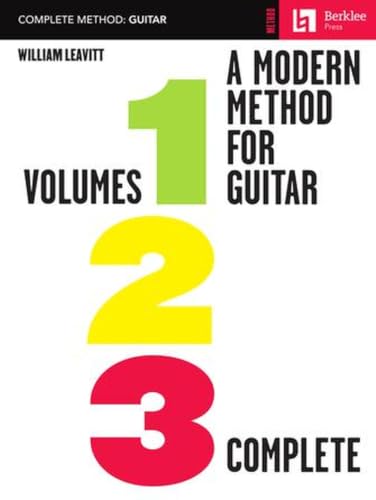
For those with a solid understanding of music notation, the William Leavitt Guitar Method Book: Complete Edition Volumes 1, 2, and 3 offers a structured and thorough approach to mastering guitar. This extensive resource focuses on standard notation, emphasizing technique, chord fingering, and strumming. Users with prior musical training find it effective, but it’s not for absolute beginners. Expect slow progress, requiring daily practice of 15 to 30 minutes. The methodical introduction of new techniques through études builds essential skills, while supplemental materials can keep motivation high. Dedication is key, similar to a college-level commitment.
Best For: Those with a solid understanding of music notation and some prior experience in guitar, looking to develop their skills in a structured way.
Pros:
- Comprehensive approach focusing on standard notation, technique, chord fingering, and strumming.
- Effective for users with prior musical training, aiding in faster comprehension and skill development.
- Methodical introduction of new techniques through études builds essential guitar skills over time.
Cons:
- Not suitable for absolute beginners, as it assumes some familiarity with guitar and music notation.
- Progress can be slow, requiring consistent daily practice of 15 to 30 minutes or more.
- Exercises may lack tunefulness, potentially making practice less engaging without supplemental materials.
Essential Elements for Guitar – Book 1: Comprehensive Method for Beginners
Product not found or API error.
Essential Elements for Guitar – Book 1 stands out as an ideal choice for beginners enthusiastic to learn the instrument. This thorough method covers everything from basic chords and music theory to sight-reading. You’ll start with simplified C and G chords, gradually progressing to more complex songs. Each section reinforces concepts with practice tunes, making learning enjoyable. The book emphasizes standard notation, enhancing your reading skills while keeping engagement high with interesting music facts. Whether you’re studying solo or with an instructor, this user-friendly resource is highly recommended for anyone starting their guitar journey. You’ll find satisfaction in your progress!
Best For: Beginners eager to learn guitar, including both children and adults.
Pros:
- Encourages progression from simple to complex songs, making learning manageable.
- Emphasizes standard notation, which is beneficial for developing reading skills.
- Includes engaging music facts that enhance the learning experience.
Cons:
- Lacks a CD for practice, which may be available in the Level 2 edition.
- May not meet the needs of more experienced players looking for advanced materials.
- Some users might find the book’s size less portable compared to other methods.
Factors to Consider When Choosing Guitar Method Books
When you’re choosing a guitar method book, think about how the content fits your learning style. Consider the structure and progression of the material to guarantee it’s suitable for your current skill level. Also, look for instructional clarity and any additional resources that may enhance your learning experience.
Learning Style Compatibility
Choosing the right guitar method book can greatly impact your learning experience, especially considering your unique style and preferences. Think about whether you prefer standard musical notation or tablature, as this choice can shape your reading skills and musical understanding. Check how the book progresses; it should introduce concepts gradually to suit different learning paces. Look for clear instructions and visual aids, like photos or diagrams, to help with finger placement. Audio resources are also essential; listening to examples can enhance your grasp of rhythm and melody. Finally, verify the teaching methodology matches your learning style—whether you thrive on structured lessons, practice exercises, or a mix of theory and application.
Content Structure and Progression
A well-organized guitar method book can make a significant difference in your learning journey, as it lays the groundwork for your musical development. Look for books that progress gradually from basic concepts like note reading and simple melodies to more advanced techniques. This guarantees you build a solid foundation. Effective content organization should include clear sections for chords, strumming patterns, and music theory, helping you grasp the relationships between musical elements. Visual aids, like finger placement photos and chord diagrams, enhance comprehension, especially for beginners. Additionally, method books featuring various musical genres keep you engaged and broaden your understanding of different styles. Finally, regular practice recommendations encourage consistency, reinforcing the material covered in each section.
Instructional Quality and Clarity
While exploring guitar method books, you’ll quickly realize that instructional quality and clarity are crucial for effective learning. Look for books that offer clear explanations and structured paths, helping you grasp foundational concepts. High-quality photos for finger placement and detailed diagrams make it easier to follow along, especially for beginners. Additionally, books that include audio resources or play-along tracks can greatly enhance your understanding of how to play, particularly with challenging tunes. A gradual progression from basic to advanced techniques guarantees you build confidence and competence. Pay attention to the clarity of language used in explanations; clear, concise wording prevents confusion and promotes a smoother learning experience, regardless of your skill level.
Target Audience Suitability
When selecting guitar method books, it’s essential to take into account the target audience’s age and musical background, as this directly impacts their learning experience. Some books are tailored for children or absolute beginners, while others suit intermediate players or those with prior musical experience. Look for structured learning paths that align with the skill level and pace of your audience to avoid frustration. Evaluate the instructional style to guarantee it’s relatable; some learners might need a gradual introduction to complex concepts. Engaging content, like familiar songs or fun music facts, can enhance motivation and retention. Finally, consider various learning preferences, as visual aids, audio resources, or interactive elements can greatly aid comprehension.
Additional Resources Availability
Choosing the right guitar method book involves considering the availability of additional resources that can enhance your learning experience. Look for books that provide audio lessons or supplementary materials for a small fee, as these can deepen your understanding of the content. Some methods include QR codes or links to online resources, making your learning more interactive. It’s also essential to select books with a structured progression and clearly defined resources, ensuring you can effectively build your skills. Additionally, access to a community or forum can be invaluable; sharing insights and seeking support from peers or instructors fosters a collaborative learning environment that can greatly boost your guitar journey.


