

Looking for the perfect guitar EQ pedal to achieve your sound in 2025? Check out the Donner 10 Band Equalizer for versatile tone shaping, or the Boss GE-7 for precise control. The JOYO 6-Band EQ offers robust features, while the JIM DUNLOP MXR M109S provides six frequencies for fine-tuning. For a more extensive range, the SONICAKE 10-Band EQ won’t disappoint. Want to make the best choice? Discover what to evaluate before settling on your ideal pedal.
Donner 10 Band Equalizer Pedal for Guitar and Bass

The Donner 10 Band Equalizer Pedal is ideal for guitarists and bassists seeking to fine-tune their sound with precision. This fully functional 10-band graphic equalizer lets you adjust each frequency, offering a ±15 dB gain range for tailored tone control. You’ll appreciate the true bypass feature, ensuring a transparent signal without unwanted noise. Built from durable aluminum alloy, it’s designed to withstand the rigors of the road. While it doesn’t include a power adapter, its solid construction and versatile capabilities make it suitable for any music style. Get ready to elevate your sound with this essential EQ pedal!
Best For: Guitarists and bassists looking for precise sound customization and control.
Pros:
- Fully functional 10-band graphic equalizer allows for detailed frequency adjustments.
- True bypass feature preserves signal integrity and eliminates unwanted noise.
- Durable aluminum alloy construction ensures reliability during performances.
Cons:
- Power adapter is not included, requiring an additional purchase.
- May be complex to use for beginners unfamiliar with equalization.
- Limited to 10 bands, which might not satisfy advanced users seeking more detailed control.
Boss GE-7 7-band EQ Pedal

For guitarists seeking precise tone sculpting, the Boss GE-7 7-band EQ pedal is an essential addition to your pedalboard. With seven optimized frequency bands, you can easily boost or cut your overall signal to enhance your sound. Weighing just 15.8 ounces and featuring a sturdy metal body, it’s built for durability. Users rave about its smooth sliders and versatility, making it perfect for tackling feedback or fitting your tone within a band’s dynamics. Whether you’re practicing quietly or performing live, this pedal cleans up your signal and elevates your tone, making it a must-have for any guitarist.
Best For: Guitarists looking for a reliable and versatile EQ pedal to sculpt their tone and enhance their sound in various settings.
Pros:
- Smooth, sturdy sliders provide precise control over frequency bands.
- Versatile tool for boosting signals, tackling feedback, and fitting tone within band dynamics.
- Durable metal body ensures longevity and reliability during performances.
Cons:
- Some users may need time to fully explore and utilize all features effectively.
- The pedal’s analog signal format may not suit those preferring digital effects.
- Limited to seven frequency bands, which may not cover all specific tonal needs.
JOYO 6-Band EQ Pedal for Electric Guitar (JF-11)

Looking to fine-tune your electric guitar’s tone? The JOYO 6-Band EQ Pedal (JF-11) offers six adjustable frequency bands at 100Hz, 200Hz, 400Hz, 800Hz, 1.6kHz, and 3.2kHz, each with a boost or cut of up to ±18dB. This flexibility lets you enhance highs for clarity, boost mids to cut through mixes, and reduce lows to eliminate muddiness. Built from durable aluminium alloy with a True Bypass feature, it guarantees your sound remains pristine. For the best performance, connect your guitar fully and use a JOYO power adapter to minimize noise. Experience the difference with this budget-friendly gem!
Best For: Guitarists looking to customize their tone with a versatile and affordable EQ pedal.
Pros:
- Versatile Tone Shaping: Six frequency bands allow for precise adjustments to enhance or cut specific tonal ranges.
- Durable Construction: Made from aluminium alloy, ensuring stability and longevity on stage or in the studio.
- True Bypass Feature: Maintains the integrity of your sound when the pedal is not in use, preventing unwanted tone coloration.
Cons:
- Power Dependency: Requires a specific power adapter for optimal performance, which may not be included.
- Learning Curve: Adjusting multiple frequency bands may take time for beginners to master effectively.
- Limited Frequency Range: Some advanced users may find the range of frequencies insufficient for specialized tone shaping needs.
JIM DUNLOP MXR M109S Six Band EQ Guitar Effects Pedal
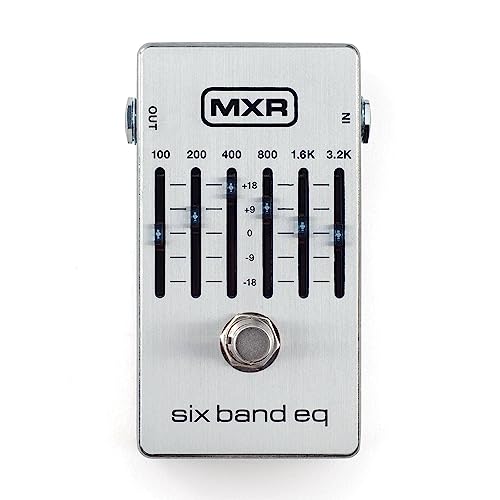
Guitarists seeking versatility and precision in their tone will find the JIM DUNLOP MXR M109S Six Band EQ Guitar Effects Pedal an excellent choice. With the ability to cut or boost six frequencies up to ±18dB, this pedal offers immense control over your sound. Its lightweight aluminum housing and true bypass switching preserve your tone, while the low noise floor guarantees clarity. LEDs enhance visibility, even in bright conditions. Users rave about its effectiveness in shaping tones, adding warmth, and controlling feedback. If you’re looking to dial in your perfect sound, the M109S is your go-to EQ pedal.
Best For: Guitarists seeking versatile tone shaping and precise sound control in their effects setup.
Pros:
- Offers the ability to cut or boost six frequencies up to ±18dB for extensive tonal control.
- Low noise floor with upgraded noise-reduction circuitry ensures clarity in sound.
- True bypass switching preserves the integrity of your guitar tone.
Cons:
- Lacks a master volume control, which may limit overall volume adjustment.
- Some users find the power supply connection placement less accessible.
- Design critiques include sharp edges on sliders and a desire for better protection for the PCB.
SONICAKE EQ Equalizer Guitar Effects Pedal Tone Group 10-Band

The SONICAKE EQ Equalizer Guitar Effects Pedal stands out with its 100% analog 10-band equalization, making it an excellent choice for musicians who crave precise tone shaping. With ±15dB adjustable gain for each band and 11 sliders, you can quickly dial in your ideal sound. The true bypass circuit guarantees a clean signal path, preserving your tone without unwanted coloration. Plus, it’s versatile enough for various instruments, allowing you to sculpt your sound effortlessly. Just remember, you’ll need a 9V center-negative power supply to get it up and running. Enjoy crafting your perfect tone with this powerful EQ pedal!
Best For: Musicians seeking precise tone shaping and versatility across various instruments will find the SONICAKE EQ Equalizer Guitar Effects Pedal ideal for their needs.
Pros:
- 100% analog design ensures high-quality sound and responsiveness.
- ±15dB adjustable gain for each band allows for detailed tone customization.
- True bypass circuit maintains a clean signal path, preserving your original tone.
Cons:
- Requires a 9V center-negative power supply, which is not included.
- May be overwhelming for beginners due to the number of sliders and settings.
- Limited to 10 bands, which might not satisfy advanced users looking for more detailed equalization options.
STRICH EQ Pedal for Electric Guitar

For those seeking precise tonal control, the STRICH EQ Pedal for Electric Guitar stands out as an exceptional choice. With its 10-band equalizer, covering frequencies from 31.25Hz to 16kHz, you can fine-tune your sound with ±12dB gain or attenuation on each band. Crafted from durable aluminum alloy, it’s lightweight yet sturdy, perfect for travel. The true bypass design guarantees your signal remains clear and uncolored, while ten independent bands and quick-setting points offer versatile sound modulation. Just plug it in with a DC 9V adapter, and you’re ready to elevate your tone without any unwanted noise.
Best For: Musicians looking for precise tonal control and versatility in sound modulation for their electric guitar or bass.
Pros:
- Durable aluminum alloy construction ensures longevity and withstands travel wear and tear.
- True bypass design maintains signal integrity, providing a clear and uncolored sound.
- Ten independent frequency bands with quick-setting points allow for extensive tonal customization.
Cons:
- Requires a separate DC 9V adapter, which is not included with the pedal.
- May be considered complex for beginners unfamiliar with equalization settings.
- The compact design may limit the number of additional pedals that can be used on a pedalboard.
Guitar EQ Pedal, 5 Band Electric Guitar Equalizer
Product not found or API error.
If you’re a musician looking to fine-tune your sound, the Guitar EQ Pedal, 5 Band Electric Guitar Equalizer, offers a powerful solution. This compact pedal features five adjustable bands (100Hz, 250Hz, 630Hz, 1.6kHz, 4kHz) with ±18dB for each band, allowing you to sculpt your tone effectively. Its true bypass design guarantees a transparent sound without unwanted noise. Weighing just 7.7 ounces, it fits seamlessly on any pedalboard. Users appreciate its versatility, from vintage tones to high-gain sounds, while some note minor signal loss. Overall, it’s a fantastic choice for beginners and budget-conscious musicians seeking quality performance.
Best For: This guitar EQ pedal is best for beginners and budget-conscious musicians looking to enhance their sound versatility and tone sculpting capabilities.
Pros:
- Compact design makes it easy to integrate into any pedalboard.
- True bypass feature ensures a clean, transparent signal without unwanted noise.
- Versatile sound options allow for a wide range of tones, from vintage to modern high-gain.
Cons:
- Some users report minor signal loss and slight hiss during use.
- The footswitch quality has been described as having a budget feel, with rough action.
- Durability concerns regarding the screen and switch may affect long-term use.
Factors to Consider When Choosing Guitar EQ Pedals
When you’re choosing guitar EQ pedals, there are several key factors you shouldn’t overlook. Consider the frequency bands offered, the gain adjustment range, and whether the pedal features true bypass. Also, think about build quality and durability, as well as size and portability to guarantee it fits your needs.
Frequency Bands Offered
Choosing the right EQ pedal involves considering the number of frequency bands available, which typically ranges from 5 to 10. The number of bands directly affects how precisely you can shape your tone. More bands give you greater control, allowing you to fine-tune your sound for different musical styles and settings. If you’re focused on specific tonal adjustments, look for pedals optimized for guitar frequencies, as they enhance clarity and articulation. Each frequency band usually offers a gain or attenuation range of ±12dB to ±18dB, providing flexibility in adjusting your tone. Ultimately, the combination of frequency bands influences how effectively you can address feedback and sculpt unique sounds tailored to your playing style.
Gain Adjustment Range
The gain adjustment range in guitar EQ pedals plays a significant role in how you shape your sound. Typically, you can boost or cut frequencies by up to ±15dB or ±18dB for each band, giving you precise control over your tonal characteristics. A wider gain adjustment range offers you greater flexibility, allowing you to enhance specific frequencies or reduce unwanted resonance effectively. If you choose pedals with multiple frequency bands, like 6-band or 10-band configurations, you’ll enjoy more nuanced adjustments across a broader spectrum. Adjusting gain settings independently for each band helps you fine-tune your mix, ensuring clarity in both live performances and recordings. Understanding this range is essential for achieving the sound profile you desire.
True Bypass Feature
If you want to guarantee your guitar’s tone remains pure, consider the true bypass feature in EQ pedals. This wiring design allows your guitar signal to pass through the pedal without any alteration when it’s disengaged, guaranteeing a clean, uncolored tone. True bypass pedals eliminate unwanted noise, popping, or buzzing that can plague buffered bypass pedals. They typically use a mechanical switch that directly connects the input and output, offering straightforward and reliable performance. Many guitarists prefer true bypass for its transparency, especially when using multiple pedals, as it minimizes potential signal degradation. When evaluating EQ pedals, checking for true bypass is crucial to guarantee your overall tone remains unaffected when the pedal isn’t in use.
Build Quality and Durability
When evaluating guitar EQ pedals, build quality and durability should be high on your list of priorities. Look for pedals made from durable materials like aluminum alloy, as they resist wear and tear during regular use and travel. A true bypass design is crucial to maintain your signal integrity, guaranteeing no unwanted noise interferes with your tone quality when the pedal isn’t in use. Pay attention to weight distribution; balanced designs provide stability, preventing slipping or tipping during performances. Finally, high-quality components and upgraded circuitry are essential for reducing noise levels, enhancing the overall sound. Investing in a well-constructed pedal not only improves performance but also guarantees it withstands the rigors of your musical journey.
Size and Portability
Choosing the right size and portability features in guitar EQ pedals can greatly impact your performance experience. Compact models, like the Guitar EQ Pedal, fit easily on pedalboards and in cases, making them perfect for musicians on the go. Many EQ pedals are lightweight yet durable, often made from aluminum alloy, ensuring they can withstand the rigors of travel without weighing you down. Smaller options, such as the 5 Band Electric Guitar Equalizer, offer essential tone-shaping capabilities in a mini design. Portability is further enhanced by compact controls and layout designs that allow for quick adjustments during live performances. Remember, the weight can vary from around 7.7 ounces for mini models, so consider how easily you can transport and set up your gear.
Power Supply Requirements
Understanding power supply requirements is key to guaranteeing your guitar EQ pedal performs at its best. Most pedals need a 9V power supply, either from a battery or an external adapter, so check compatibility before you buy. Be aware that some pedals operate on a center-negative power supply; using the wrong type can damage your equipment. It’s also essential to use a power adapter that meets your pedal’s current requirements to prevent noise and assure peak performance. Additionally, not all pedals come with a power supply, so you might need to purchase one separately. Finally, consider if your pedal has unique power requirements, like USB options, based on your setup.
Versatility Across Instruments
Versatility is a essential factor in selecting an EQ pedal, especially if you play multiple instruments. A great EQ pedal should accommodate both guitars and basses, allowing you to tailor your sound across various musical styles. Look for pedals with 10-band configurations that provide a broad frequency range, enabling you to shape your tone for electric and acoustic settings alike. Adjustable gain ranges, typically ±15 dB or more, enhance the pedal’s functionality, guaranteeing optimal performance regardless of your instrument’s output. True bypass functionality is critical for maintaining signal integrity, letting you switch the pedal in and out without degrading sound quality. Finally, durable construction, like aluminum alloy housing, guarantees your pedal can withstand different performance environments.
Price and Budget Considerations
When it comes to selecting an EQ pedal, price and budget considerations can make a significant difference in your decision-making process. EQ pedals range from around $50 for entry-level models to over $200 for high-end options, so it’s crucial to establish a budget based on your needs. While budget-friendly pedals offer basic features, investing in a mid-range or premium model often means better sound quality and durability. Don’t forget to factor in additional costs like power adapters or special cables. Checking customer reviews can help you find a pedal that balances performance and price. Finally, look for retailers with return policies or trial periods to test a pedal before committing to your purchase.


