

To elevate your sound quality in 2025, you need a premium guitar cable. Check out the Amazon Basics for a stylish option, or go for the durable Kevlar-reinforced 2-pack. The high-purity FIBBR cable offers exceptional performance, while the New bee cable guarantees noise reduction. If you’re after professional quality, try the Fender series. Don’t overlook the versatile 8 pack or the budget-friendly New bee. Stick around to discover which cable best suits your needs!
Amazon Basics 1/4 Inch Tweed Cloth Right-Angle Instrument Cable for Electric Guitar (10 Foot)

If you’re a casual guitarist looking for a reliable and affordable cable, the Amazon Basics 1/4 Inch Tweed Cloth Right-Angle Instrument Cable is a fantastic choice. This 10-foot cable features a stylish yellow-and-brown tweed jacket, combining durability with flexibility. With 23 AWG oxygen-free copper conductors, you’ll enjoy improved signal clarity and minimal interference. The right-angle connectors enhance convenience while delivering a high-quality, noise-free performance. Users appreciate its value for home use, and it even includes two Velcro cable ties for organization. However, keep in mind it might not be sturdy enough for professional gigs. Overall, it’s a solid choice for everyday musicians.
Best For: Casual guitarists seeking an affordable and reliable cable for home use.
Pros:
- High-quality 23 AWG oxygen-free copper conductors for improved signal clarity.
- Stylish yellow-and-brown tweed jacket adds durability and flexibility.
- Includes two Velcro cable ties for convenient organization.
Cons:
- May not be sturdy enough for professional stage performances.
- Some users report concerns about durability during live gigs.
- Limited warranty period of 1 year may not satisfy all users.
Guitar Cable 10 ft 2 Pack, Kevlar-Reinforced Instrument Cable

The Guitar Cable 10 ft 2 Pack, Kevlar-Reinforced Instrument Cable is perfect for musicians who demand durability and high-quality sound. With Kevlar reinforcement, these cables endure over 150,000 bends, ensuring reliability for every gig. The anti-kinking nylon braided design prevents tangling, while professional-grade 99.99% 20 AWG OFC wire delivers clean, noise-free audio. Featuring one straight and one 90-degree connector, they’re versatile for electric guitars, bass, and keyboards. Plus, you get two cables at an affordable price, backed by a lifetime warranty. Elevate your sound with this reliable, flexible, and high-performing cable pack that caters to all musicians.
Best For: Musicians seeking durable, high-quality instrument cables for electric guitars, bass, and keyboards that provide reliable performance and sound clarity.
Pros:
- Durable Kevlar reinforcement allows for over 150,000 bends, significantly increasing longevity.
- Anti-kinking nylon braided design prevents tangling, enhancing usability during performances.
- Offers exceptional audio quality with minimal signal loss, making it suitable for various instruments.
Cons:
- 10-foot length may be limiting for larger stage setups.
- Some users may prefer a straight connector for all applications, rather than a 90-degree option.
- While affordable, lower-priced alternatives may be available without Kevlar reinforcement.
FIBBR Guitar Cable (10ft) for Electric Instruments

For musicians seeking reliable performance, the FIBBR Guitar Cable (10ft) stands out with its high-purity 24AWG oxygen-free copper construction. This cable features a right-angle 1/4 inch plug, making it compatible with various electric instruments, from guitars to mixers. You’ll enjoy fast, clear audio transmission with minimal signal loss, guaranteeing your audience hears your guitar’s true sound. The durable nylon jacket withstands over 18,000 bends, while anti-oxidant nickel-plated plugs provide secure connections. With a lifetime warranty and 24-hour support, you’re set for any performance, making this cable a great investment for both beginners and professionals alike.
Best For: Musicians of all levels looking for a durable, high-quality guitar cable that delivers exceptional sound performance.
Pros:
- High-purity oxygen-free copper construction ensures minimal signal loss and clear audio transmission.
- Durable nylon jacket withstands over 18,000 bends, making it flexible and tangle-free.
- Lifetime warranty and 24-hour customer support provide peace of mind for users.
Cons:
- The right-angle plug may not be compatible with all guitar setups or pedals.
- Some users may find the price higher than basic cables, although it offers superior quality.
- Limited length options; the 10ft length may not suit all performance needs.
New bee Guitar Cable 10ft for Electric Instruments

Designed specifically for electric instruments, the New bee Guitar Cable 10ft stands out as a top choice for musicians seeking reliability and performance. With its right angle to straight connector design, you’ll enjoy versatile use in any setup. The 22AWG oxygen-free copper center conductors enhance signal transfer, while the PVC insulation and double shield effectively reject noise. Users rave about the significant reduction in static and the premium feel of the cable. With solid connectors ensuring durability, you can trust this cable for both home and stage use. Plus, enjoy peace of mind with 24-hour customer support for any questions.
Best For: Musicians seeking a reliable and high-performance cable for electric instruments that reduces noise and enhances sound quality.
Pros:
- Durable design with solid connectors that withstand frequent use and prevent kinks.
- Excellent noise rejection due to high-density shielding, resulting in clear sound without hum or hiss.
- Versatile compatibility with various electronic equipment, making it ideal for both home and stage setups.
Cons:
- Some users found the packaging to be cheap, which may not reflect the quality of the product.
- The right angle connector may not suit everyone’s preferences or setups.
- Length of 10ft may be limiting for some musicians requiring longer cables for larger stages or setups.
Fender Professional Series Instrument Cable (10 ft)
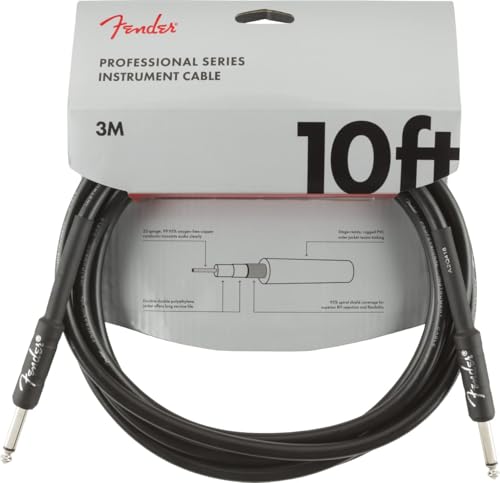
Engineered with musicians in mind, the Fender Professional Series Instrument Cable (10 ft) stands out for its flexibility and exceptional sound quality. This durable cable features a 95% oxygen-free spiral shielding that minimizes handling noise, while the 8mm PVC jacket reduces interference. You’ll appreciate the sturdy nickel-plated connectors and the 22-gauge conductor, which enhance signal strength. Rated 4.8 out of 5 stars, this cable is perfect for both stage and studio use, ensuring your tone remains pure. Plus, with a limited lifetime warranty, you can trust its reliability and value for your musical journey.
Best For: Musicians seeking a reliable and high-quality instrument cable for both stage and studio use.
Pros:
- Durable construction with nickel-plated connectors and a strong 22-gauge conductor for optimal signal strength.
- Minimized handling noise due to 95% oxygen-free spiral shielding and low interference from the 8mm PVC jacket.
- Highly rated with a 4.8 out of 5 stars from over 13,000 reviews, indicating strong customer satisfaction.
Cons:
- Some users have mixed opinions regarding comparisons to professional-grade cables.
- The warranty may be voided if the cable is damaged due to misuse or neglect, which could be a concern for some.
- At a length of 10 ft, it may not be suitable for all performance setups requiring longer distances.
8 Pack 10FT Instrument Cable for Guitar, Bass, Keyboard, Microphone & Mixer Amp

The 8 Pack of 10FT Instrument Cables stands out as an ideal choice for musicians who need versatility and reliability in their setups. With eight vibrant colors, you can easily identify each cable during your performances, whether you’re jamming with a guitar, keyboard, or microphone. Constructed from durable copper and PE material, these cables guarantee peak signal transmission with minimal loss. The tangle-free design makes setup a breeze, allowing you to maneuver freely. While some users have reported noise issues, many appreciate the flexibility and durability, making these cables a great option for both home and live performances.
Best For: Musicians seeking a versatile and colorful solution for connecting various instruments and equipment during performances.
Pros:
- Vibrant colors for easy identification and enhanced visual appeal.
- Durable construction with minimal signal loss for optimal sound transmission.
- Tangle-free design allows for easy setup and maneuverability.
Cons:
- Mixed customer feedback regarding performance, with some experiencing noise issues.
- Occasional reports of cables malfunctioning, leading to dissatisfaction.
- Users recommend checking cables upon receipt to ensure functionality.
New bee 10ft Guitar Cable for Electric Instruments
If you’re a guitarist or bassist looking for a reliable and versatile cable, the New bee 10ft Guitar Cable for Electric Instruments stands out as an excellent choice. Its right angle to straight connector design offers flexibility, while the 22AWG oxygen-free copper conductors guarantee superior signal transfer. Users appreciate the substantial noise reduction, eliminating hum or hiss during performances. The cable feels premium and sturdy, maintaining flexibility without kinks. Plus, with a responsive customer service team ready to assist, you can order confidently. Many have bought multiple cables, praising the quality and performance at an affordable price.
Best For: Guitarists and bassists seeking a reliable, high-quality cable for both home and stage performances.
Pros:
- Superior Signal Transfer: 22AWG oxygen-free copper conductors enhance audio clarity and reduce static.
- Durable and Flexible Design: Sturdy construction prevents kinks while maintaining flexibility for easy use.
- Noise Reduction: Effectively eliminates hum or hiss, providing a clean sound during performances.
Cons:
- Packaging Quality: Some users found the packaging to feel cheap despite the product’s solid performance.
- Limited Length Options: The 10ft length may not suit all users’ needs, especially for larger stage setups.
- Right Angle Connector Limitations: The right angle connector may not be compatible with all setups or preferences.
Factors to Consider When Choosing Guitar Cables
When you’re choosing guitar cables, several factors can impact your sound and performance. You’ll want to take into account cable length options, signal quality, and how durable and flexible the cable is. Additionally, pay attention to connector types and shielding for ideal noise reduction.
Cable Length Options
Choosing the right cable length for your guitar setup is essential for achieving ideal sound quality and performance. Standard lengths typically range from 10 to 20 feet. For home setups and small performances, a 10-foot cable is perfect. If you’re moving around during gigs, a 20-foot cable offers more flexibility, but it may introduce signal loss. On the other hand, shorter cables under 10 feet are best for studio recordings, minimizing interference and optimizing sound quality. When selecting cable length, assess the distance between your instrument and amplifier or effects pedals to avoid excess slack. Remember, balancing cable length with quality is vital, as longer cables can lead to noise and signal degradation if not properly shielded.
Signal Quality Importance
Signal quality plays a pivotal role in how your guitar sounds. Choosing high-quality cables minimizes signal loss and distortion, preserving the integrity of your original tone. Look for cables made with oxygen-free copper (OFC) conductors, as they enhance audio clarity by reducing interference. Proper shielding, like spiral or braided designs, is essential for blocking external noise and electromagnetic interference, ensuring a clean sound during performances. Pay attention to the gauge of the wire; lower AWG numbers, like 20 AWG, indicate thicker wires that transmit signals more effectively. Finally, opt for durable, well-engineered connectors to reduce wear and maintain a reliable connection to your instrument and amplifier. Prioritizing these factors will greatly enhance your overall sound quality.
Durability and Flexibility
Although you might focus primarily on sound quality, the durability and flexibility of your guitar cables are equally essential. Look for cables with Kevlar reinforcement; they can withstand over 150,000 bends, greatly outlasting standard options. Anti-kinking designs, like nylon braiding, prevent tangling and make maneuvering during performances a breeze. A durable outer jacket, such as braided tweed cloth or PVC, protects your cable from damage while ensuring it’s easy to handle. High-quality connectors made from nickel-plated metal offer solid connections, enhancing both durability and flexibility. Also, consider cables with a lower gauge like 20 AWG, as they provide better signal strength and reliability for live performances, ensuring your sound stays consistent no matter the venue.
Connector Types Available
When you’re selecting guitar cables, understanding the different connector types is crucial for achieving the finest sound and performance. Most guitar cables feature 1/4 inch connectors, available in straight and right-angle styles. Straight connectors are great for direct connections to amplifiers and pedals, while right-angle connectors save space and reduce strain in tight setups. The quality of connectors matters too; nickel-plated connectors are often favored for their durability and conductivity. Some cables come with locking connectors that secure the connection, preventing accidental disconnections during use. Make certain to evaluate the compatibility of connector types with your instruments and amplifiers to guarantee peak functionality and sound quality. Choosing the right connectors can greatly enhance your overall performance.
Shielding and Noise Reduction
Effective shielding and noise reduction are essential considerations in choosing guitar cables, as they directly impact your sound quality. Look for cables featuring high-density braided shields, like 97% OFC shielding, which greatly enhance noise rejection. This guarantees a clean signal path, free from electromagnetic and radio frequency interference. Additionally, cables with oxygen-free copper (OFC) conductors improve signal clarity and minimize signal loss from external sources. Opting for a double-shielded design—combining a braided shield and conductive PVC—adds an extra layer of protection against noise. Don’t overlook the quality of connectors, either; nickel-plated options not only provide a secure connection but also help reduce the risk of unwanted noise and hum during your performance.
Price vs. Performance
Choosing the right guitar cable can feel overwhelming, especially with the wide range of prices and performance levels available. Lower-priced cables often compromise durability and sound quality, while higher-priced options typically feature better materials and construction, enhancing your performance. Investing in a quality cable can greatly reduce signal loss and noise interference, providing clearer audio transmission that serious musicians appreciate. Look for features like oxygen-free copper conductors and effective shielding, as these can improve sound clarity and minimize hum. Additionally, a lifetime warranty or strong customer support can justify a higher price, offering peace of mind. Ultimately, balancing price with expected performance across different settings, like home practice or live gigs, is essential for making an informed choice.


