

If you’re looking for the best guitar cable length testers to guarantee your sound is spot on, you’ve got great options. The Mackie MTest-1 is versatile and battery-powered, while the MFL 15-Plug offers compact functionality. For a more advanced choice, check out the Elite Core OSP CT-04C. The Hosa CBT-500 is another solid pick, known for its durability. Don’t overlook the UEI CLM100 for precise measurements. Stick around to discover what makes each of these testers stand out!
Mackie Cable Tester (MTest-1)

If you’re a sound engineer or an AV professional, the Mackie Cable Tester (MTest-1) is an indispensable tool for your toolkit. This battery-powered tester quickly verifies connections for various types, including TRS, XLR, and Speak-On. With its durable metal construction, you can count on it to withstand the rigors of live sound and studio setups. The bright LEDs clearly indicate pin status, helping you troubleshoot efficiently. Although it lacks an off switch and has a manual rotary switch for testing, its ease of use and portability make it a favorite among users, boasting a solid 4.7-star rating from over a thousand reviews.
Best For: Sound engineers and AV professionals looking for a reliable and efficient cable testing solution.
Pros:
- Durable metal case designed to withstand tough environments.
- Bright LEDs for clear visibility of pin status during testing.
- User-friendly design that facilitates quick troubleshooting.
Cons:
- No off switch, which may lead to battery drainage.
- Potential reverse polarity issues that could affect testing.
- Manual rotary switch requires user intervention for pin testing.
MFL 15-Plug Audio Cable Tester Line Finder

The MFL 15-Plug Audio Cable Tester Line Finder is an essential tool for musicians and audio professionals who need to troubleshoot a variety of cable types quickly and efficiently. This compact, heavy-duty tester supports up to 13 cables simultaneously, easily identifying continuity issues through clear LED indicators. You can test a wide range of connectors, from TRS jacks to HDMI, making it versatile for any audio setup. Its user-friendly interface allows beginners and pros alike to operate it with ease. With its rugged metal construction, this reliable tester is built to last, ensuring you’re always ready for your next performance.
Best For: The MFL 15-Plug Audio Cable Tester Line Finder is best for musicians and audio professionals needing to quickly troubleshoot various audio cables.
Pros:
- User-friendly interface allows for easy operation by both beginners and experienced users.
- Supports testing of multiple cable types simultaneously, making it versatile for different audio setups.
- Durable metal construction ensures long-lasting reliability in various environments.
Cons:
- Absence of an RJ11 tester in newer models may limit testing for some users.
- 9V battery not included, requiring an additional purchase for operation.
- Potential lack of advanced features, such as signal strength indication or phantom power testing.
Elite Core OSP CT-04C Cable Tester, Speaker

For musicians and audio professionals who need reliable cable testing, the Elite Core OSP CT-04C Cable Tester stands out with its thorough connection options, including XLR, MIDI, and various speaker types. Weighing just 1.84 lbs and featuring a heavy-duty metal construction, it’s built to last. The 9-way switch allows you to select connections easily, while LED indicators confirm continuity and connection status. Users appreciate its accuracy and ease of use, making it ideal for quickly identifying and repairing damaged cables. Plus, with responsive customer support, you’ll feel confident in your purchase. Don’t overlook this essential tool for your gear!
Best For: Musicians and audio professionals who require a reliable and versatile cable testing tool for various connection types.
Pros:
- Durable construction ensures longevity and reliability in various environments.
- Versatile connection options allow testing of multiple cable types, including XLR, MIDI, and speaker connections.
- User-friendly design with LED indicators and a 9-way switch simplifies the testing process.
Cons:
- Battery tray issues reported by some users, although customer service provides effective resolutions.
- Manual or chart for light sequences would enhance usability for those unfamiliar with cable types.
- Requires a 9V battery, which is not included, adding an extra step for users at the time of purchase.
Hosa CBT-500 Audio Cable Tester
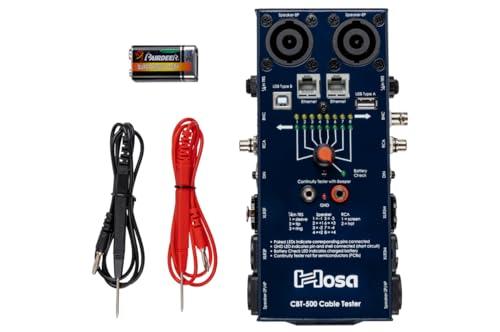
Designed for audio professionals who need reliable cable diagnostics, the Hosa CBT-500 Audio Cable Tester excels in identifying signal failures across various cable types, including XLR, phone, and USB connections. With removable leads for continuity verification, it guarantees you can test additional connectors easily. Built like a tank, it’s durable but may feel large for those with smaller hands. Users appreciate its ability to diagnose faults in DMX cables and other connections. While some reported issues with LED brightness and battery compartment stability, overall, its performance makes it a must-have tool for any audio engineer.
Best For: Audio professionals seeking a reliable and versatile tool for diagnosing signal failures in various cable types.
Pros:
- Durable construction, described as “built like a tank,” ensuring long-term use.
- Capable of testing a wide range of cable types, including XLR, phone, and USB connections.
- Highly rated for ease of use, making it essential for both field and studio work.
Cons:
- Some users report issues with LED brightness and stability of the battery compartment.
- The size may be cumbersome for individuals with smaller hands.
- Limited support for spare parts, particularly for specific connectors like Ethernet jacks.
UEI CLM100 Digital Electric Cable Length Meter

Engineers and contractors looking for a reliable solution to measure cable lengths will find the UEI CLM100 Digital Electric Cable Length Meter particularly beneficial. It accurately measures wire lengths up to 30,000 feet and works with copper and aluminum wires ranging from 4/0 to 26 ga. Designed for durability, its ruggedized boot guarantees reliable performance in the field. The meter features a calibration mode and temperature compensation for precise readings. Weighing just 3 pounds and powered by a 9V battery, it’s easy to handle. With a solid reputation and a 5-year warranty, this tool is a smart investment for any professional.
Best For: Engineers and contractors seeking a durable and accurate cable length measurement solution.
Pros:
- Accurate Measurements: Capable of measuring wire lengths up to 30,000 feet with temperature compensation for precision.
- Rugged Design: Built with a solid, ruggedized boot for reliable performance in various field conditions.
- Long Warranty: Comes with a 5-year limited warranty, providing peace of mind for professional use.
Cons:
- Inaccuracies with Larger Gauges: Some users reported inaccuracies when measuring larger wire gauges (#1 or 3 AWG).
- Temperature Dependency: Accuracy may depend on the wire temperature, which could affect readings in certain conditions.
- Weight Consideration: At 3 pounds, it may be slightly heavier compared to other handheld measuring devices.
Cable Guy™ Blizzard Lightings Multi-Function Cable Tester
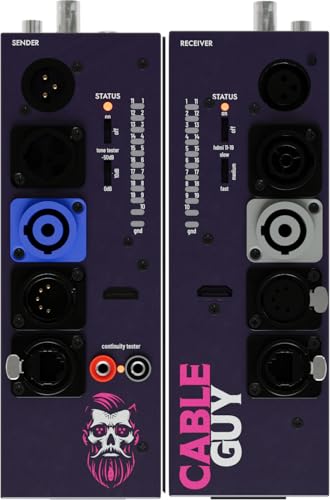
The Cable Guy™ Blizzard Lightings Multi-Function Cable Tester is an essential tool for audio and lighting professionals who need reliable and efficient cable testing. It supports various cable types, including 3-pin XLR, HDMI, and RJ45, making it versatile for different setups. You’ll appreciate the quick LED indicators that provide instant feedback on continuity, helping you spot issues fast. Its two-piece design allows for through-wall testing, perfect for permanent installations. Built with durable steel housing, this tester withstands heavy use, ensuring you can troubleshoot confidently across all your audio and lighting applications. Stay efficient and reliable with this must-have tester!
Best For: Audio and lighting professionals seeking a reliable and efficient tool for multi-type cable testing.
Pros:
- Versatile compatibility with multiple cable types including XLR, HDMI, and RJ45.
- Quick LED indicators provide instant feedback for easy troubleshooting.
- Durable steel housing ensures longevity and resilience in professional environments.
Cons:
- May be overkill for casual users who only need basic cable testing.
- The two-piece design might be challenging to manage for some users in tight spaces.
- Initial cost may be higher compared to simpler cable testers.
Cable Tester – Line Finder Cables Checker

For audio professionals and musicians who need reliable testing solutions, the Cable Tester – Line Finder Cables Checker stands out with its support for a wide range of cable types, including USB, RJ45, and XLR. This rugged tester features an 8-way switch and an LED light panel that indicates continuity and pin status, ensuring quick and efficient testing. Users appreciate its durable, compact metal casing and effectiveness in identifying issues in audio setups. While it excels for many cables, keep in mind it doesn’t test standard 1/4 TS guitar cables, so consider your specific needs when choosing this tool.
Best For: Audio professionals and musicians seeking a reliable and versatile cable testing solution.
Pros:
- Durable metal casing designed for long-term use in various audio setups.
- Supports a wide range of cable types, making it useful for different applications.
- Quick and efficient testing with LED indicators for continuity and pin status.
Cons:
- Does not test standard 1/4 TS guitar cables, which may limit its utility for some musicians.
- Some users have noted a lack of specific features for certain cable types.
- Requires a 9-volt battery, which is not included with the product.
Factors to Consider When Choosing Guitar Cable Length Testers
When choosing a guitar cable length tester, you should consider several key factors. Think about cable compatibility, testing accuracy, and the build quality to guarantee reliability. Don’t forget to evaluate the user interface and portability to find a tester that fits your needs best.
Cable Compatibility Options
Choosing the right guitar cable length tester hinges on its compatibility with various connectors. You’ll want a tester that supports 1/4″ TRS, TS, and XLR connectors to suit different guitar and audio setups. Look for models that verify continuity for common guitar cables, vital for live performances and studio work. If you’re working with multiple instruments, consider testers that also accommodate RCA and Speak-On cables, enhancing your versatility. Make sure your tester can handle both standard and non-conventional connectors, as this can be important for diverse audio equipment. A broader compatibility range allows for thorough troubleshooting of your audio and guitar cables, saving you from needing multiple devices and ensuring you’re always ready to perform.
Testing Accuracy and Reliability
A reliable guitar cable length tester not only needs to be compatible with various connectors but also must provide accurate readings for effective troubleshooting. Testing accuracy is vital for ensuring reliable signal transmission, so look for testers that utilize LED indicators to confirm connections and continuity status. Assess the reliability of a tester by its ability to diagnose faults across different cable types, catering to both studio and live settings. Testers that support individual pin testing enhance reliability by pinpointing specific connection issues, which can prevent performance problems. Regular calibration and maintenance are essential for maintaining accuracy, especially when measuring resistance or continuity in various cable lengths. Invest in a tester that meets these criteria for ideal performance.
Build Quality and Durability
While evaluating guitar cable length testers, you should prioritize build quality and durability to guarantee your investment stands the test of time. Look for testers made from heavy-duty metal or rugged materials that can handle frequent use in various environments. A solid build enhances durability and provides stability during testing, reducing damage from accidental drops. Compact designs make it easier to transport your tester across different venues without hassle. Verify the product description highlights features like robust casings or reinforced components, as these greatly extend the tester’s lifespan. Don’t forget to check user reviews for insights on build quality; they often reveal potential strengths or weaknesses in the tester’s design that can guide your decision.
User-Friendly Interface Design
When it comes to guitar cable length testers, having a user-friendly interface is essential for quick and efficient troubleshooting. Look for testers with clearly labeled controls and indicators, so you won’t need extensive training to get started. LED indicators are a must; they provide instant feedback on cable continuity and connection status, allowing you to spot issues fast. An intuitive design, featuring well-placed rotary or toggle switches, makes switching between different cable types seamless. Additionally, a straightforward manual can enhance your experience by explaining light sequences and functionalities. With these elements in mind, you’ll find a tester that’s not only effective but also easy to use, making your setup process much smoother.
Portability and Weight Considerations
Choosing a guitar cable length tester isn’t just about functionality; portability and weight can greatly impact your experience, especially when you’re on the move. Lightweight models, typically under 2 pounds, make it easy to carry your tester to gigs or studio sessions. Look for compact designs that measure around 6 to 8 inches, allowing for convenient storage in your instrument cases or gear bags. Battery-powered options are a must, freeing you from the hassle of external power sources and enhancing usability in various locations. Additionally, verify your tester boasts a durable construction to withstand travel rigors without compromising performance. Finally, a user-friendly interface with clear LED indicators can help you troubleshoot quickly when every second counts.


