

If you’re looking for effortless wireless jamming, these guitar Bluetooth adapters have got you covered. The JOYO 2.4GHz system and AKLOT set offer great battery life and low latency. The SWIFF Electronic System delivers excellent sound quality, while the Upgrade 2.4GHz model allows connection for multiple devices. Don’t forget the B6 Guitar Headphone Amp for added effects. Each of these options enhances your playing, and there’s even more to discover.
JOYO 2.4GHz Wireless Guitar System for Electric Instruments
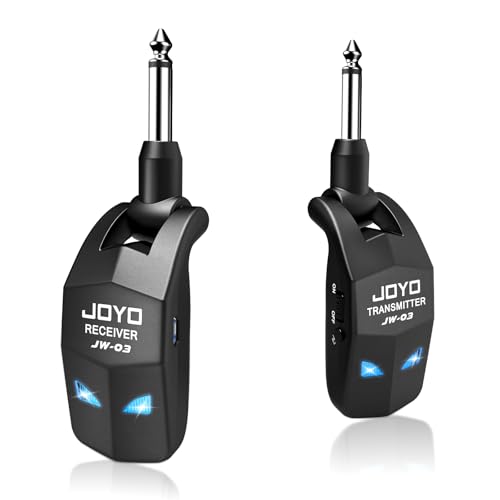
If you’re a guitarist looking for an efficient and hassle-free way to connect your instrument wirelessly, the JOYO 2.4GHz Wireless Guitar System is an excellent choice. This system features a 4-channel rechargeable transmitter and receiver, ensuring compatibility with electric guitars, basses, and more. With a transmission distance exceeding 20 meters and low latency under 5ms, you’ll enjoy crisp audio without interruptions. Pairing is straightforward—just turn on both devices and press the buttons. Plus, with over 8 hours of battery life, you won’t have to worry about recharging during your gigs. Experience seamless jamming with JOYO!
Best For: Guitarists and bassists seeking a reliable and easy-to-use wireless connection for their instruments.
Pros:
- Low latency of under 5ms ensures a seamless playing experience without noticeable delays.
- Rotatable plugs enhance compatibility with a variety of electric and acoustic instruments.
- Long battery life of over 8 hours allows for extended performance without frequent recharging.
Cons:
- Limited to a transmission distance of 20 meters, which may not be suitable for larger stages.
- Requires periodic recharging, which may be inconvenient for some users during longer events.
- May experience interference in crowded wireless environments, affecting signal quality.
AKLOT Wireless Guitar System Transmitter Receiver Set

The AKLOT Wireless Guitar System Transmitter Receiver Set stands out as an excellent choice for musicians seeking a hassle-free, high-quality wireless solution. Operating on a 2.4GHz frequency, it boasts a built-in rechargeable battery lasting over 10 hours. With a compact design and 270° rotatable plug, it’s compatible with various instruments. Users appreciate the crystal-clear sound and minimal signal loss, making it reliable for performances. You can easily connect up to four devices simultaneously. While some feedback highlights a less-than-expected range and a tangled charging cord, overall, this system delivers impressive performance for wireless jamming.
Best For: Musicians looking for a reliable and high-quality wireless guitar solution that offers ease of use and portability.
Pros:
- Plug and Play design allows for easy setup and connection with multiple devices simultaneously.
- Excellent sound quality with minimal signal loss, ideal for live performances.
- Compact and lightweight design with a rotatable plug for compatibility with various instruments.
Cons:
- Range may not meet expectations, with some users reporting it closer to 30 feet instead of the advertised 30 meters.
- Charging cord can become tangled, leading to user dissatisfaction with its organization.
- Occasional interference noted in environments with high signal congestion.
SWIFF Electronic Guitar Wireless System
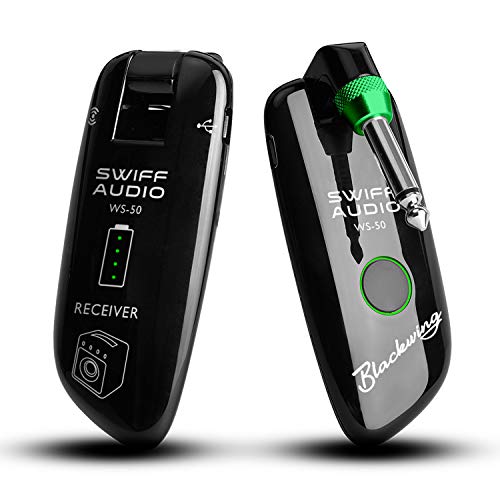
For musicians seeking a reliable and high-quality wireless solution, the SWIFF Electronic Guitar Wireless System stands out with its impressive UHF frequency transmission technology. This rechargeable system features a 220° rotatable plug for quick setup and supports multiple devices with separate channels. Enjoy a remarkable transmission range of 164ft without signal loss, and experience crystal-clear sound with a 24bit/48kHz sampling rate. Weighing just 7.4 ounces, it’s perfect for portability. While users rave about its sound quality and range, some have noted battery life concerns for the receiver. Overall, it’s a solid choice for effortless jamming.
Best For: Musicians looking for a reliable and high-quality wireless solution for electric instruments that is portable and easy to use.
Pros:
- Excellent sound clarity and impressive transmission range of 164ft without signal loss.
- Compact and lightweight design, making it easy to transport for gigs and practice.
- Quick setup with a 220° rotatable plug and compatibility with most electric instruments.
Cons:
- Battery life concerns, particularly noted for the receiver, averaging around 5 hours.
- Some reports of quality control issues affecting product longevity.
- Users have expressed caution about similar models that may not meet the same standards.
Guitar Wireless System: Bluetooth Transmitter Receiver for Electric Instruments

Guitarists seeking freedom from cables will find the Guitar Wireless System—Bluetooth Transmitter Receiver an ideal choice. With a 50m transmission range and UHF technology, you’ll enjoy clear 24-bit audio with less than 0.5% distortion. Its universal 6.35mm interface fits electric guitars and basses perfectly. Experience high-fidelity sound with a frequency response of 30Hz to 18kHz and a signal-to-noise ratio over 90dB. The plug-and-play setup makes pairing effortless, while the 220° rotatable design adds versatility. Plus, with a rechargeable battery lasting up to 5 hours, you’ll jam wirelessly without interruption. Enjoy the freedom to play!
Best For: Guitarists looking for a hassle-free, wireless solution to enhance their performance and mobility while playing electric instruments.
Pros:
- Plug-and-play setup for quick and easy pairing without complicated configurations.
- High-fidelity audio quality with a wide frequency response and low distortion for an immersive sound experience.
- Rechargeable battery lasts up to 5 hours, eliminating the need for disposable batteries.
Cons:
- Some users have reported concerns regarding volume levels and high-frequency response.
- Limited to a 50m transmission range, which may not be suitable for larger venues.
- Customer feedback indicates occasional latency issues, which may affect performance in certain situations.
Upgrade 2.4GHZ Wireless Guitar System Transmitter Receiver for Electric Guitar Bass

Designed specifically for electric guitars and basses, the Upgrade 2.4GHZ Wireless Guitar System Transmitter Receiver offers unparalleled freedom of movement without the hassle of cables. With a 2.4G uncompressed signal, you’ll experience low noise and latency, allowing you to jam up to 40 feet away without losing quality. It supports six devices simultaneously and features a quick automatic pairing process. Weighing just 6.3 ounces, it’s portable and easy to set up. While battery life lasts around four hours, be mindful of charging habits to avoid abrupt sound issues. This system is perfect for practice and casual performances.
Best For: Musicians seeking an affordable and portable wireless solution for practice and casual performances.
Pros:
- Great mobility; eliminates tripping hazards from cables.
- Easy setup; quick connection process with automatic pairing.
- Good sound quality; minimal latency and impressive performance.
Cons:
- Some users experienced loud noise when the battery dies.
- Battery life may vary; reports of around 90 minutes usage in some cases.
- Not recommended for stage use due to potential signal interference.
2.4GHz Wireless Guitar System for Electric Instruments

The 2.4GHz Wireless Guitar System (Model: A9 Black) stands out as an excellent choice for musicians seeking a hassle-free wireless solution for electric instruments. With a transmission distance of over 30m and a lightweight design of just 1.76 ounces, it’s perfect for jamming without the clutter of cables. Its plug-and-play functionality means you can start playing instantly, while the uncompressed audio transmission guarantees clear sound with low latency. Rechargeable in just two hours, this system supports various electric instruments, making it a versatile option for both beginners and seasoned players. Enjoy the freedom of wireless jamming effortlessly!
Best For: Musicians seeking a convenient and economical wireless solution for electric instruments, suitable for both beginners and experienced players.
Pros:
- Plug-and-play functionality for instant use without setup.
- Uncompressed audio transmission ensures clear sound with low latency.
- Lightweight and portable design allows for easy mobility during performances.
Cons:
- Some users report reduced tone quality compared to higher-end systems.
- Working time of 4 hours may require frequent recharging for extended sessions.
- Limited to electric instruments, not suitable for acoustic or non-electric setups.
B6 Guitar Headphone Amp Mini Plug Amplifier for Electric Guitar
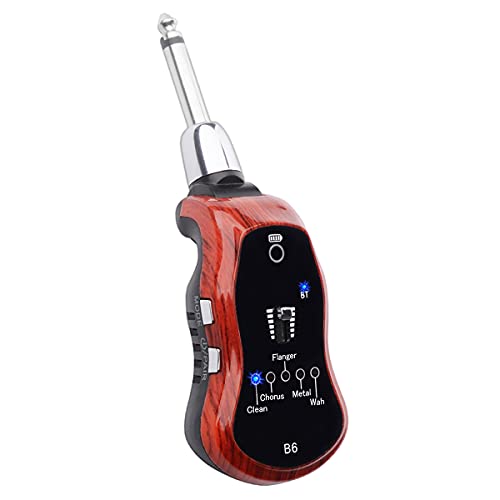
For musicians seeking an efficient way to practice quietly, the B6 Guitar Headphone Amp Mini Plug Amplifier stands out as an essential tool. This compact device features Bluetooth connectivity, allowing you to jam along with your favorite tracks from a distance. With five guitar effects—Clean, Chorus, Flanger, Metal, and Wah—you can experiment with your sound. Its rechargeable battery lasts over eight hours, making it perfect for on-the-go sessions. Weighing only 1.58 ounces, it’s highly portable. While sound quality varies, it’s a game changer for discreet practice and fits well into your music routine without hassle.
Best For: Musicians looking for a portable and convenient way to practice quietly with Bluetooth connectivity.
Pros:
- Highly portable: Weighs only 1.58 ounces and features a compact design, making it easy to carry.
- Long battery life: Offers over 8 hours of use on a single charge, suitable for extended practice sessions.
- Bluetooth functionality: Easily pairs with devices for playing along with backing tracks.
Cons:
- Variable sound quality: Some users experience static noise at higher volumes, which may affect practice quality.
- Limited effects: Only one effect can be used at a time, requiring button cycling to switch, which can be inconvenient.
- Not ideal for home practice: May not meet the needs of serious players seeking high-quality sound for extended use.
Factors to Consider When Choosing Guitar Bluetooth Adapters
When picking a guitar Bluetooth adapter, you’ll want to take into account several key factors. Signal quality and latency can affect your playing experience, while battery life and compatibility with your gear are essential for smooth performance. Don’t forget about range and ease of use, as these elements can greatly enhance your practice sessions.
Signal Quality and Latency
Signal quality and latency are vital considerations in your quest for the perfect guitar Bluetooth adapter. Look for adapters that provide uncompressed digital transmission to guarantee clear audio without degradation. Aim for a signal-to-noise ratio above 90 dB for the best sound experience. Latency is another key factor; the best adapters offer latency below 5 milliseconds, assuring real-time performance without a noticeable delay. A frequency response range of 20 Hz to 20 kHz is essential for accurately reproducing your guitar’s full tonal spectrum. Additionally, consider transmission ranges exceeding 30 meters (approximately 100 feet) for flexibility during performances. High-quality adapters often feature automatic pairing, minimizing setup time and enhancing ease of use when you’re ready to jam.
Battery Life Duration
Finding the right guitar Bluetooth adapter isn’t just about sound quality and latency; battery life is another critical factor that can impact your playing experience. Battery life varies widely, with some adapters offering over 10 hours of continuous use, while others might only last 4-5 hours on a full charge. Most use rechargeable lithium batteries that take 1 to 2 hours to fully charge. Consider your usage habits; heavy use or features like effects can drain the battery faster. Quick pairing and automatic connection features can enhance your experience by minimizing setup time. Always check customer feedback for real-world battery performance, as advertised figures often differ from actual usage. Choose wisely to keep your jamming sessions uninterrupted!
Compatibility With Instruments
Choosing the right guitar Bluetooth adapter hinges on its compatibility with your instruments. Look for adapters featuring a universal 6.35mm audio interface, guaranteeing they work with various electric instruments like guitars, basses, and violins. Rotatable plugs, such as 220° or 270°, enhance compatibility with different input jack positions, making setup easier. If you perform with multiple devices, find an adapter that supports simultaneous connections, allowing one transmitter to link with several receivers. It’s vital to confirm the adapter matches the specific type of instrument you use—be it electric, acoustic, or digital—since some models cater to specific applications. Finally, check that the adapter provides clear audio transmission with minimal latency for the best performance.
Range and Transmission Distance
When selecting a guitar Bluetooth adapter, understanding the range and transmission distance is essential to guarantee you can perform freely without interruptions. Most adapters offer an effective range of 20 to 30 meters, letting you move around without losing connection quality. Typically, these systems operate on the 2.4GHz frequency band, ensuring reliable connectivity within that range. It’s also vital to take into account latency; a good adapter should keep it below 5ms for real-time audio transmission. Keep in mind that environmental factors can affect transmission distance, so some models are designed to handle interference or obstacles. In practice, the effective range might be closer to 30 feet, so always check real-world performance against advertised specs.
Ease of Use
One key factor to contemplate in guitar Bluetooth adapters is ease of use, which can greatly enhance your playing experience. Look for plug-and-play functionality that allows you to start jamming immediately without complicated setup processes. Automatic pairing capabilities are essential, as they minimize connection time and make the device user-friendly. Additionally, consider adapters with rotatable plugs, allowing for flexibility in connecting to different instruments without strain. Visible indicators, like large LEDs, help you monitor power and connection status during performances. Finally, opt for devices boasting long battery life (over 5 hours) and quick charging options, ensuring you can play for extended periods without interruptions. This way, you can focus on your music, not on troubleshooting.
Design and Portability
The design and portability of guitar Bluetooth adapters play a significant role in your overall experience as a musician. When selecting an adapter, consider its dimensions and weight; compact designs typically range from 4.3 to 5.1 inches in length and weigh between 1.5 to 7.4 ounces, enhancing transportability. Look for a rotatable plug design, allowing for flexible connection angles with various instruments, usually offering 220° to 280° rotation. Opt for models with plug-and-play setups for quick activation during performances. Additionally, battery life matters—many adapters provide rechargeable batteries lasting from 4 to over 10 hours, ensuring extended use without frequent charging. Ultimately, a lightweight, compact design makes it easy to carry your gear wherever you go.
Charging and Connectivity
Selecting the right guitar Bluetooth adapter requires careful consideration of charging and connectivity features to guarantee a seamless playing experience. Many adapters come with built-in rechargeable lithium batteries, offering 4 to over 10 hours of use on a full charge. This means you can jam longer without worrying about constant recharging. Look for USB charging options, as some models even feature double-sided cables for simultaneous charging of the transmitter and receiver. Charging times typically range from 1 to 2 hours, assuring quick readiness. Additionally, verify compatibility with various connector types, like 6.35mm jacks and Micro-USB, and consider a rotatable plug design, which allows for easy connection no matter the jack orientation.
Price and Value
When considering a guitar Bluetooth adapter, price and value play significant roles in your decision-making process. Prices can range from $30 to over $200, depending on features and brand reputation. To assess value, compare features like battery life, range, and signal quality against the cost. Higher-priced models often offer better durability and sound quality, which can be worth it for serious musicians. Think about long-term value too; evaluating battery longevity and warranty options can save you money on replacements. Don’t forget to check customer reviews and ratings, as they provide insights into whether an adapter delivers good value for its price, helping you avoid low-quality options.


